1821 Info 11c_1 for Caleb Crompton
The later life of Lyle Blackman
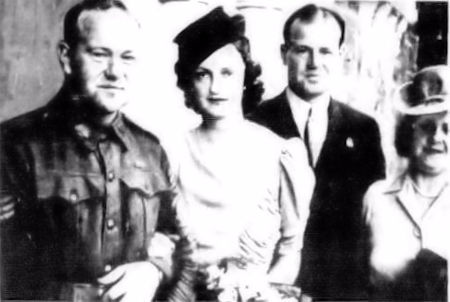
Lyle's marriage to Vida Mary VICKERS
Family hearsay reports that, when in England convalescing from a wound in the arm, Lyle
married Vida Mary VICKERS on 15
February 1917 (GRO ref: Bourne 7a 542).
1917
Marriage solemnised at the Abbey Church
in the Parish
of
Bourne in the County of
Lincoln
When married
Name and Surname
Age
Condition
Rank or Profession
Residence
Father's name
Father's profession
15th Feby 1917
Lyle Aubrey Blackman
26
Bachelor
Soldier
Durrington Wilts
William Blackman
Farmer
No. 156
Vida Mary Vickers
26
Spinster
Bourne
Robert Vickers
Church officer
Married in the
Parish Church according to the
Rites and Ceremonies of the
Church of England by licence by me
H Cotton, Vicar The marriage
} Lyle Aubrey Blackman
in the
} Maggie Heywood
was solemnised
} Vida Mary Vickers
Presence
}
between us } of us
} C.S. Ellis Capt
Above: Lyle and Vida's marriage certificate. Durrington is a settlement on
the eastern edge of Salisbury Plain and near the Larkhill Military Camp. In Australia the
marriage was announced in the local papers by the respective families There is no record of
Captain CS Ellis in Bean, Austin, Nominal Roll of AIF or National Archives of Australia.
This would account for her staying with Mrs Heywood of West Farm on the
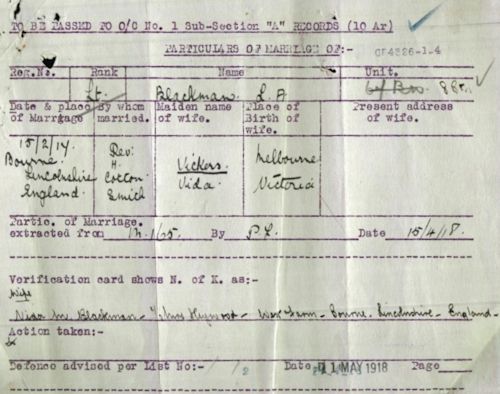
AIF marriage form dated 01 May 1918.
The form confirms her birth in Melbourne and that she and Lyle were married in Bourne,
Lincolnshire.
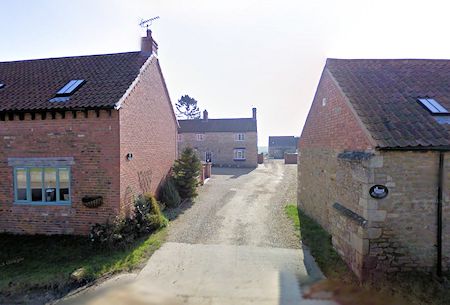
West Farm, Bourne,
Lincolnshire, is not shown on the 1887 or 1906 6" maps.
Their only child, Margery Joyce, was born at West Farm Bourne 1 on 20 May 1918
(GRO: ref Bourne 7a 498)
Source: Lyle Blackman's service record NAA ref: B2455 page 52
At the time of Lyle's wedding the 8/Bn was out of the line at Bozentin-le-Petit, near
Pozieres, on working duties before moving back in to the line at the end of the month. There is
no record, in the February War Diary of Lyle being on leave. He was posted to England or was on
leave there between:
09 April 1916 and 22 April 1917, first at Monte Video Base Depot [AIF No.2 Command Depot
located at what is now Australia Road in Chickerell, Dorset DT3 4DD and is now the Wyke Regis
Territorial Army base] and then on a Lewis Gun and musketry instructors course, which he
passed as a First Class Instructor. These dates span the time of his marriage,
02 June 1917 and 15 September 1917 or 06 December 1917 he went to England to join the
67th Battalion, an overseas training battalion, of the Australian 6th
Division at Perham Down
1 (Windmill Hill), Wiltshire. This coincides with the conception of
their baby;
undated '1914 leave';
Convalescence leave from 15 April 1918 to 29 April 1918 and 16 September 1918 to 30
September 1918.
1821info11c_1, sheet 2
Lyle's service record reports that he was hospitalised in:
Alexandria with gastro-enteritis/dysentery from 27 June 1915 to 08 August 1915 whilst
serving at ANZAC in Gallipoli;
Lemnos on 17 October 1915 with influenza;
3rd London General Hospital, Wandsworth, on 11 November 1915 with dysentery;
3rd London General Hospital, Wandsworth, on 04 April 1918 with a bullet wound in the right
upper arm; and
3rd London General Hospital, Wandsworth, from 28 August 1918 with wounds to right
wrist, left shoulder and both thighs. He returned to duty 15 October 1918.
What was Vida doing in England and how did they meet and who were the mysterious Mrs
Williamson and Mrs Heywood in Bourne? Three problems yet to be resolved.
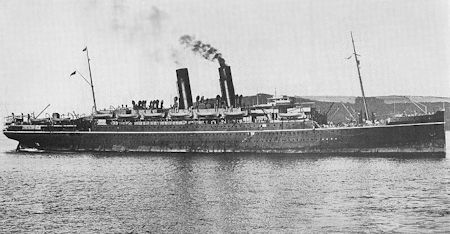
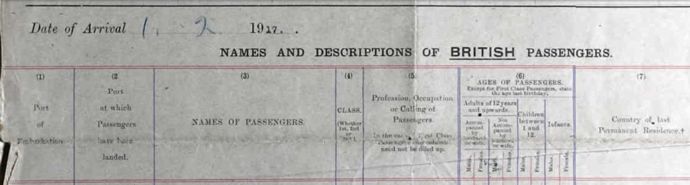
Vida arrived in London on 01 February 1917 on the P.&O.S.N. Coy'
s RMS Kaisar-I-Hind (Official number 128653) of 11429 tonnes, which was en voyage from
Sydney to London. Vida joined the ship at Melbourne as a spinster.
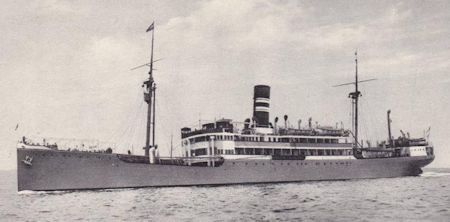
Left: Kaisar-I-Hind in 1914
Above: A composite image of Vida's passenger list entry
Above: A Map location 1 High Street, circled red, in
Rippingale in 1905. The Bull Inn is number 3 High Street
Grandmother Sarah WILLIAMSON died in the first three months of 1917 (GRO ref: Bourne 7a 472)
, possibly whilst Veda was en route.
1821info11c_1, sheet 3
Her intended destination was to Mrs Sarah WILLIAMSON of 1 High Street,
Rippingale, Bourne, Lincolnshire, which is 7 miles (11km) north of Bourne. It is suggested
that this is her maternal grandmother. The 1911 census records Sarah WILLIAMSON, a widow
aged 81, living at 1 High Street, Rippingale PE10 0SR with her sister Elizabeth HIND, both
pensioners born in Rippingale - see second name of Vida's brother David Hind VICKERS.
Rippingale is the inspiration for The Archers, BBC Radio 4's "every-day story of
country folk", which is the world's longest-running soap opera. In its hey-day,
upwards of 25 million tuned in - even today more than 5 million switch on to hear the
latest story.
Above: 1 High Street Rippingale in 2015. The Bull Inn is to
the right.
The Argus Monday 16 April 1917
The Ballarat
Courier Saturday 21 April 1917
MARRIAGES.
BLACKMAN-VICKERS. On February 15, 1917, at Abbey Church, Bourne, Lincolnshire,
England, Lieut. Lyle A. Blackman, 8th Battalion, A.I.F., youngest son of Mr. and Mrs.
W. Blackman, of Ballarat, to Vida M. Vickers, only daughter of Mr. and Mrs. R.
Vickers, of Melbourne, Victoria, Australia.
MARRIAGES. BLACKMAN-VICKERS.- On 15th February, at Abbey Church Bourne, Lincolnshire,
England, Lieut Lyle A. Blackman, 8th Battalion A.I.F. youngest son
of Mr and Mrs W. Blackman, Ballarat to Vida M. Vickers, only daughter of Mr and Mrs R.
Vickers, Melbourne.
The Argus of 05 June 1918 reports Margery Joyce's birth.
BIRTHS
BLACKMAN (nee Vida Vickers).- On the 20th May, 1918, at West Farm, Bourne, Lincolnshire,
England, the wife of Lieut. L. A. Blackman - a daughter. Both well. (By cable.)
Vida's ancestry and life before marriage
The Melbourne Electoral Roll of 1914 lists Vida Mary VICKERS as living at 97 Russell Street in
the Latrobe subdivision of Melbourne with her father Robert, a caretaker, mother Mary Ann and
brother David Hind, a clerk. Until her departure in 1917 she is listed as having 'home
duties'.
Robert Vickers                                                    Sarah Hind
b.11feb1853 Kirby Underwood, Bourne, (GRO ref: Bourn 7a 286)      |
d.12feb1928 11 Malin Street, Kew, Melbourne                       m.
|                                                                 |
m.3Qt1874 (GRO ref: Bourn 7a 505)                                 ? Wilkinson
|                                                                 |
Mary ann ======================================================== Martha Williamson
Williamson                                                        b.3rdQt1876 (GRO ref: Bourn 7a 312)
b.4thQt1852 (GRO ref: Bourne 7a 266)                              d.1stQt1948 (GRO ref N. Kesteven 3b 115)
d......1939                                                       |
|                                                                 m.2ndQt1900 (GRO ref: Bourne 7a 815)
|============|============|============|============|========||   |
Robert       William      John         David        Vida          John richard (GRO ref: Bourn 7a 815)
edward       thomas       barber       hind         mary          Heywood
b......1875  b......1876  b......1880  b......1880  b.21jun1891   b.2ndQt1876  (GRO ref: Lincoln 7a 517)
d......1939  d.25oct1961  d......1881  d......1951  d.24may1974   d.1stQt1950  (GRO ref: Lincoln 3b 314)
The 1911 census confirms the marriage between Martha and John Richard Heywood and that the
Maggie Heywood, a witness on the marriage certificate, was their daughter and Vida's cousin.
Note: Ancestry transcribed the surname as Hegwood.
1821info11c_1, sheet 4
1911 Census:      Sun/Mon 2nd April/3rd April 1911
Source:   TNA Ref:        RG14 Piece: 19759
          Reg. Gen. Ref:  RG78 PN  ; En.Dist: 40; Sched:
          RegDist: Lincoln SubDist: Lincoln Home
Dwelling: 6 Tempest Street
Place:    Lincoln, Lincolnshire
Rooms in dwelling, other than scullery, landing, lobby, closet, bathroom: 6
Years married: 11
Children:      Alive 2, dead none

Name                        Rel  Mar  Age  Occupation      Status  Birthplace
John Richard Heywood        Head  M    34  Engineer Clerk  Worker  Lincoln, Lincs
Martha Heywood 	            Wife  M    34                  Rippingale, Lincs
Edward Richard Heywood 	    Son         9                  Laughton, Lincs
Margaret Constance Heywood  Dau	        5                  Laughton, Lincs
Left: 6 Tempest Street Lincoln home of the Haywoods
The Australian Electoral Roll 1903-1977, available on Ancestry, Vida and her family and their
occupations as:
1913 2148 Vickers, David Hind, 97 Russell st., Melbourne, clerk in La Trobe a sub-
district of Melbourne
1913 2149 Vickers, Mary Ann, 97 Russell st., Melbourne, in La Trobe a sub-district of
Melbourne
1913 2150 Vickers, Robert, 97 Russell st., Melbourne, caretaker in La Trobe a sub-district
of Melbourne
1913 2151 Vickers, Vida Mary, 97 Russell st., Melbourne, in La Trobe a sub-district of
Melbourne
A bright and very successful dance, conducted by the past students of the University
High School, was held at the Oddfellows' Hall, Victoria street, on Wednesday evening,
September 6. The cosy little hall was very attractively decorated with festoons of green
and white, the school colours. The committee made all round admirable arrangements to
promote the pleasure and comfort of the guests. The music, by Jones and Rosenthal's
band, was particularly enticing. It was a friendly gathering more like a private ball
than a subscription dance. The dressing was dainty all round.
... Amongst others present were ' ... Vida Vickers...
Notes: (Part source: Arthur Edgar Family Tree - Ancestry Public Members Trees)
It seems possible that Vida, whilst in England, returned to her father's roots and was
living with her maternal aunt Martha HEYWOOD née WILLIAMSON.
Bourn and the Bourne are interchangeable. Bourne is used as a generic name for villages in its registration district ie Rippingale,
Bourne
In the 1861 and 1871 census Robert VICKERS was living in Kirkby Underwood, 6 miles (9.6km)
north of Bourne, with his grandfather Mark, an agricultural labourer. Robert emigrated to
Melbourne in January 1875.
The 1911 enumerators search book for Bourne has not revealed a West Farm, though West Park
Farm is recorded.
Despite being born, married and dying in Lincolnshire, neither HEYWOOD appear to be in the
1911 census for Lincolnshire.
1821info11c_1, sheet 5
Life in Australia
Lyle left for Australia on 10 May 1919 on HMAT Wahehe 'with his wife
and child' on 'Family Ship', landing on 28 June 1919. Lyle claimed for
Vida's passage on 12 July 1919.
Left: HMAT Wahehe in civilian colours. Built as Hilda Woermann in 1914, renamed
Wahehe in 1917. She was surrendered as war reparation in 1919 to Shaw, Savill and Albion
Company, Ltd.
Captain LA BLACKMAN, MC, returned to Australia on 10 May 1919 and to his
partnership in W.D. Hill and Company, Estate Agents of Lydiard Street South, which he had
held since 1914.
Lyle was heavily involved with the South Street Eisteddfod for music and elocution
competition, to which he gave 58 years service - as clerk from 1906, assistant Secretary
(c. 1911) and then permanent secretary from 1921.
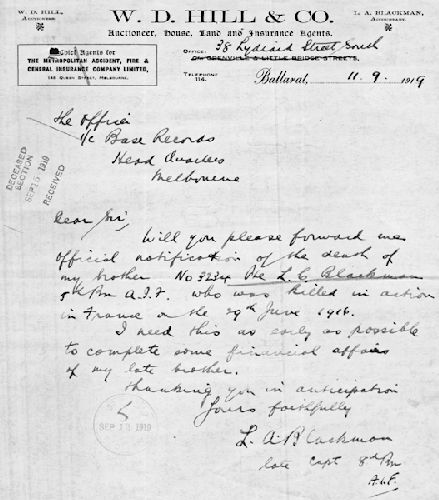
Right: A letter from Lyle BLACKMAN, the accountant of WD Hill.2
1919, 279, Blackman, Frances Emily, 709 Macarthur st., Ballarat, hd - in Ballaarat a
subdivision of Ballarat
1919, 281, Blackman, Lyle, 709 Macarthur st., Ballarat, clerk - in Ballaarat a
subdivision of Ballarat
1919, 282, Blackman, William, 709 Macarthur st., Ballarat, independent means - in
Ballaarat a subdivision of Ballarat
The 1920 roll shows that Lyle and Vida May were now living at Macarthur street, whilst his
parents had moved to 12 Baird Street with his sister Emily
1920, 290, Blackman, Emily, 12 Baird st., Ballarat, school teacher - in Ballaarat a
subdivision of Ballarat
1920, 291, Blackman, Frances Emily, 12 Baird st., Ballarat, hd - in Ballaarat a
subdivision of Ballarat
1920, 293, Blackman, Lyle, 709 Macarthur st., Ballarat, accountant - in Ballaarat a
subdivision of Ballarat
1920, 294, Blackman, Vida Mary, 709 Macarthur st., Ballarat, hd - in Ballaarat a
subdivision of Ballarat
1920, 295, Blackman, William, 12 Baird st., Ballarat, independent means - in
Ballaarat a subdivision of Ballarat
The syndicated newspaper clipping below, dates Lyle becoming secretary to the Ballarat
Eisteddfod and refers to the late WD Hill whose letter headed paper Lyle uses above. The newspaper article heaps confidence on Lyle both for his existing skills and his future plans.
The Herald Melbourne Monday 22 May 1922, page 113
SOUTH STREET SECRETARY.
Mr Lyle A. Blackman, the new
secretary of the Ballarat Eisteddfod, was associated with the late W. D. Hill from
1906 until the latter's death at the end of last year, and, with the exception of
five years absence at the war, was wholly occupied in South-street organising work. Mr
Blackman is, therefore, fully capable of continuing the great traditions which his
predecessor built up, and, judging by the additional attractive features arranged for
this year's Eisteddfod, it would appear that he intends to commence with new and
original ideas.
From 1924 to 1963 the couple moved to 46 Victoria Avenue, Ballarat, perhaps on the strength of
a salary increase.
1924, 278, Blackman, Lyle, [46] Victoria ave., Ballarat, secretary - in Ballaarat a
subdivision of Ballarat
1924, 279, Blackman, Vida Mary, [46] Victoria ave., Ballarat, hd - in Ballaarat a
subdivision of Ballarat
Their daughter Marjory Joyce is recorded at 46 Victoria Avenue in 1942 and 1943
1942, 297, Blackman, Lyle, 46 Victoria ave., Ballarat, secretary - in Ballaarat a
subdivision of Ballarat
1942, 299, Blackman, Marjory Joyce, 46 Victoria ave., Ballarat, hd - in Ballaarat
a subdivision of Ballarat
1942, 300, Blackman, Vida Mary, 46 Victoria ave., Ballarat, hd - in Ballaarat a
subdivision of Ballarat
The Electoral Roll shows that Lyle's job definition changed from clerk, to accountant, to
secretary.
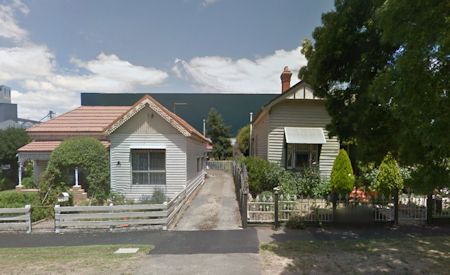
Right: 703 and 705 Macarthur Street, Ballarat 2015. As 709 has been replaced
by Unnings Warehouse these adjacent houses represent the typical architecture of the
street.
The family lived with Lyle's parents at 709 Macarthur Street.
Lyle and Vida remained there until 1925 when they moved to what became 46 Victoria
Avenue.
1821info11c_1, sheet 7
Secretary of South Street Society
After being its pre-war accountant, 4 Lyle became secretary of
Ballarat's
Royal South Street Society 3 competition in 1922, a
position he held for more than 50 years, With the exception of his war service he
served the Society for 58 years, until 1963, the year before his death. The Lyle
Blackman Memorial Prize was awarded in the Speech and Drama Section of the
Eisteddfod. He is recorded as saying “Ballarat discarded the gold of the earth
for the gold of the human mind and voice, and took its place among the cultural
cities of the world.”
On Saturday 26 September 1931 the Melbourne Herald, on celebrating Lyle's tenth
anniversary as secretary and his 25th year as an official described the programme as:
What the ancient eisteddfods did for Wales in
the realm of musical art South Street has done and is doing for Australia in the
world of art generally, musical, histrionic, literary and calisthenic. Scores of
South Street graduates have gone abroad, and many of them have achieved fame. The
Society in framing its prize schedule aims at covering the whole gamut of artistic
senses, from the writing of poetry and of music to the expression of the written
word and the interpretation of the undulating notes. South Street invites the cream
of proved or latent talent in any city, town or village to be put to the test before
its skilled adjudicators.
The Barrier Daily Truth of Broken Hill lists the eleven grade A brass band in the
South Street band competition of 1953, considered the mecca (sic) of musical contests
in Australia. Lyle was reported as being very pleased with the number of entries.
5
Right: Lyle Blackman cartoon
Above: Lyle Blackman (second from right, front row) and the
South Street Society
1821info11c_1, sheet 8
On Tuesday 24 October 1924, The Horsham Times reported on RSSS's difficult times. After 34
years the citizens of Ballarat appeared to take the competitions for granted, especially in the
financial support for the many competitions. Prize money, £50 in the first year, for 1924 totalled
£1,600 of which only £406 had been donated. Of the 32 donors only six were Ballarat citizens.
Similarly, in 'the old days' nearly all the South Street's competitors were Ballarat
citizens. In 1924 this had fallen to 25%. The committee had had an expenditure of £3,800 and were
working on an overdraft of £5.500. Mr Lyle Blackman and staff would receive contributions.
6
This article, from The Argus of 16 April 1953, gives an excellent summary of the
South Street Competition that was so much of Lyle's life. It is a history, which
sets out the Competition's objectives, notable ethos and rising success over the
years. I would suggest that Lyle's final comment reflects on the new Ballarat
wealth. It would be interesting to know how it stands in Australia after 150 years.
THEY HAPPENED IN SOUTH
STREET
South Street is one
of those places that are places in their own right. More than a locality. An idea.
No one says, "South Street, Ballarat." They just say, "
South Street," and people, even in far countries, know it as one of the world's
great cultural centres.
Peter Dawson, Florence Austral, Marjorie Lawrence, Bernard Heinze, James
Scullin there placed their feet upon the first rung of fame's ladder.
Bands, tap dancers, singers, and musicians of every variety have flocked
to Ballarat each year since 1891 to contest their talents against each other in the
South Street Competitions.
They have come from all over Australia, and even New Zealand.
The competitions of today are a far cry from those of 1891.
In that first shaky start, 260 entrants competed for prizes totalling 60
guineas.
Last year there were 3,315
entries, and prize money
amounted to a fortune of £4,566.
This year the competitions will run continuously for seven weeks - the
longest time in history-from September 14 to October 31.
Secretary of South Street Competitions since 1921 is a vigorous Ballarat
identity, Lyle Blackman. He has been associated with them since 1906.
Mr. Blackman stressed yesterday that the competitions were non-profit making.
"Any money we make goes back into the competitions to improve them,
" he said.
"We are concerned solely with improving the musical knowledge of
young Australians, and if possible to give them a footing in the musical world."
"We spare no expense in getting the best judges for events. Many,
particularly band judges, have been brought from England and Scotland.
"The competitions had their origin in a little old cottage in South
st., near Skipton st., in 1879.
Nine young men, with a passion for debating and literary activities, met
and formed a club.
The club prospered and was joined by other clubs. A contest was arranged
In 1883, but it was not until June, 1891, that these contests were officially known
as the "South Street Competitions."
By 1908 they had become so popular that a special hall, known as the
Coliseum, was erected.
This hall was destroyed by fire in 1936, and the organisers were
ironically forced to revert to the Alfred Hall, the hall they had left in favor of
the Coliseum.
As Mr. Blackman re-marked yesterday: "South Street has done much,
not only for Ballarat but for Australia. It will continue to do so."
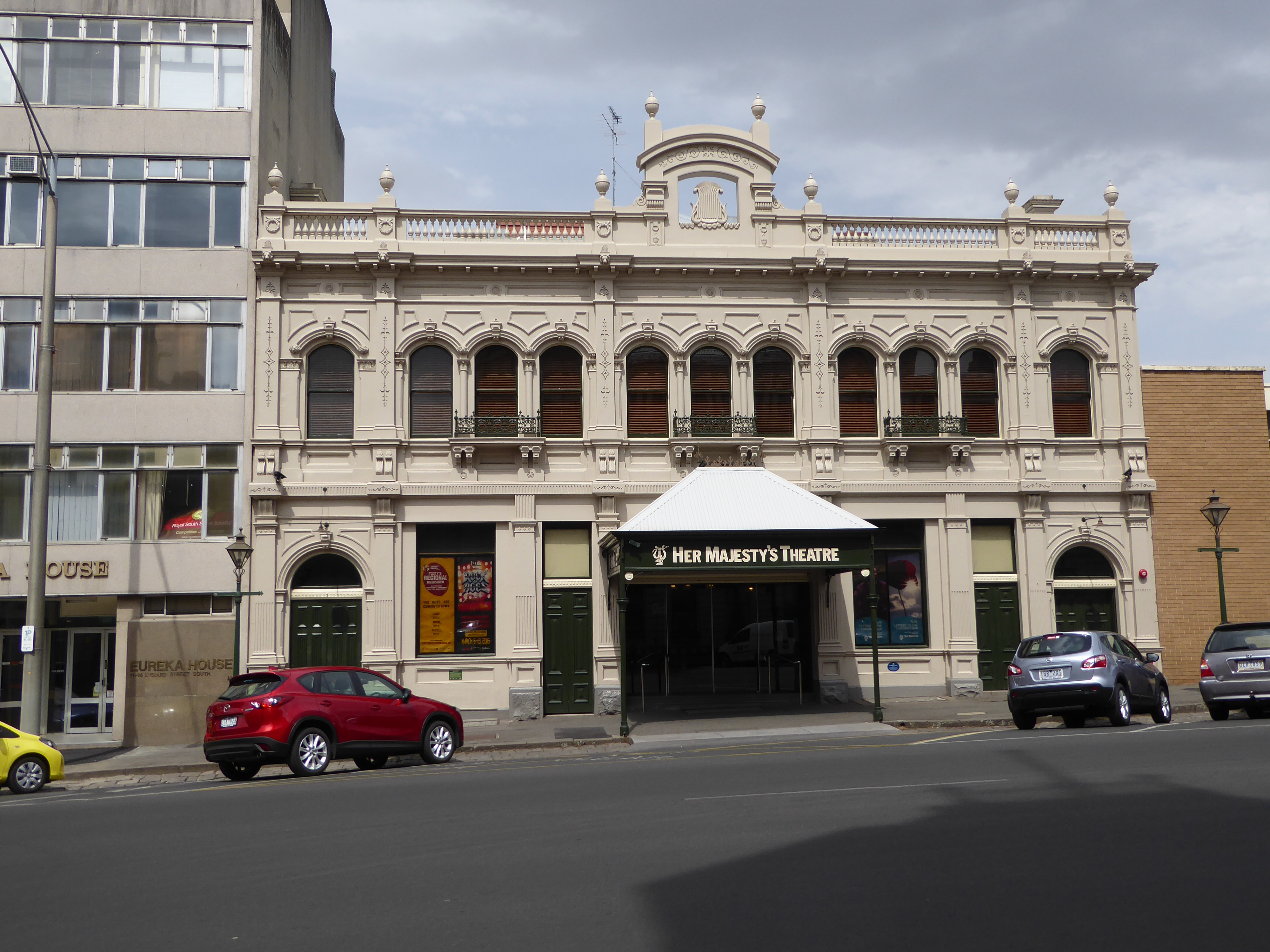
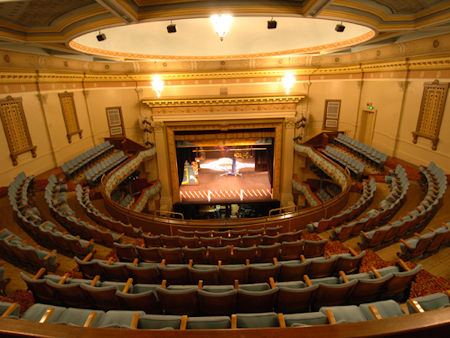
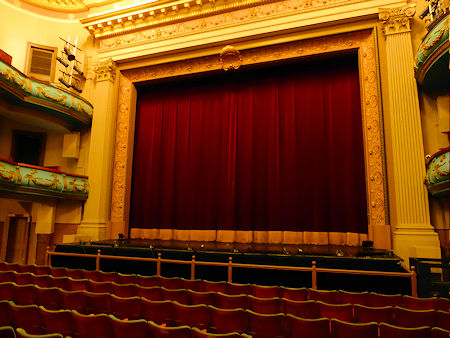
Hoverbox Photo Gallery - Her Majesty's Theatre,
Ballarat Author: November 2015
This feature does not function correctly on phones and tablets
1. The facade from Lydyard Street South
2.The stage from the balcony
3.The stage
1
2
3
1821info11c_1, sheet 9
Above: Lyle Blackman circa 1954 as secretary of the South Street Society
image 47 off 56 in an unknown source
Above: Lyle Blackman in 1962 Source: Victorian
Collection
Many of the South Street Society events took place in Her Majesty's Theatre. We were
privileged to be taken round by Glenn Crompton (no relation), who used his influence as town councillor.
On Monday 5 September 1938 it is reported that for the Ballarat Agricultural Society's
Centenary, Lyle had organised a 100 mile women's horse rally beginning on 07 November 1938.
7 Lyle served the wider Ballarat community in at least four positions, including
secretary to the Ballarat Sheep Show in 1922 8. Tuesday 28 October 1919 The Herald
announced Lyle's appointment as secretary to the Ballarat Stock and Station Agents'
Association. 9 On Saturday 29 May 1954, Lyle resigned his position as secretary of
the Ballarat Agricultural and Pastoral Society after 30 years of service. 10
In 1942 Margery Joyce was now eligible to vote, but this is her only recording at this
address.
They were living there at the time of Lyle's death, in November 1964. He was cremated
at Ballarat Crematorium.
There are no further Electoral Roll records of Vida May.
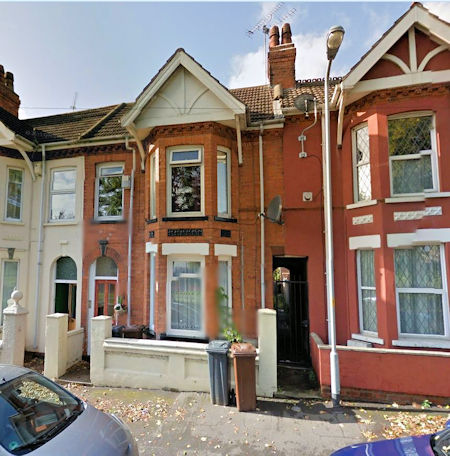
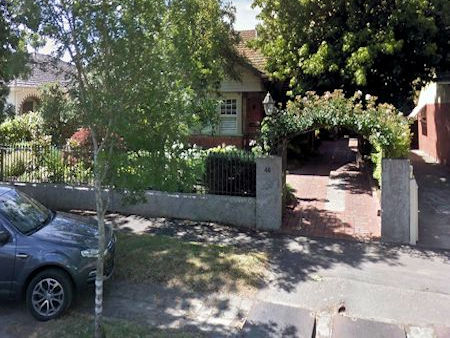
Left: 46 Victoria Avenue Ballarat, with a vista almost on the shores of Lake
Wendouree.
1821info11c_1, sheet 10
Right: Lyle Blackman's medals Source: Family
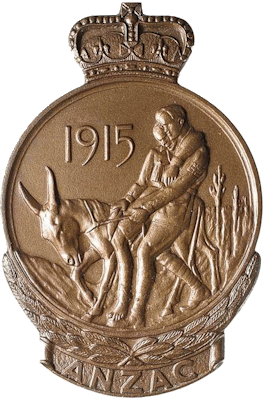
On 15 February 1969 Vida applied for Lyle's Anzac Commemorative Medallion
instituted 1967. It was awarded to surviving members of the Australian forces who served
on the Gallipoli Peninsula, at any time during the period from the first Anzac Day in
April 1915 to the date of final evacuation in January 1916. Next of kin, or other
entitled persons, are entitled to receive the medallion on behalf of their relatives if
the medallion has not been issued
Right: Gallipoli commemorative medallion showing Simpson and his donkey
1821info11c_1, sheet 11
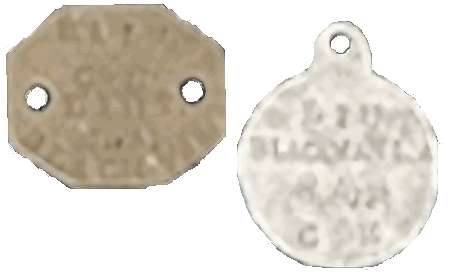
Left: Lyle Blackman's dog tags and Rising Sun Source: Family
Left: Lyle Blackman's Rising Sun Source: Family
The family have Lyle’s Webley revolver, holster, cleaning rod and still two live rounds. These
were found after Vida died in 1974. They had never been seen before by any family!
Left: Lyle Blackman's death notice circa 03 November 1964
Source: Family
1821info11c_1, sheet 12
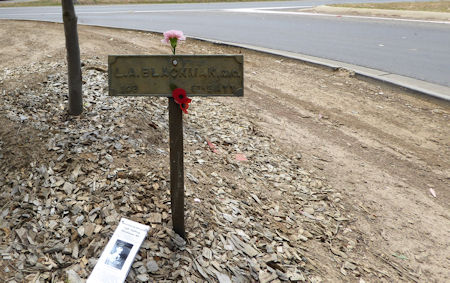
Lyle Aubrey Blackman commemorated in Ballarat
Right: Positioned on an road loop between two carriageways, Lyle
Blackman's
Avenue of Honour 4 marker in 2015 has survived turning articulated
trucks (Post 198) Source: Author November 2015
Left: Lyle Blackman's Arch of Victory marker 2015 Source:
Author November 2015
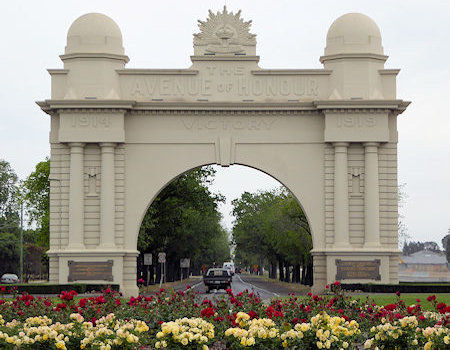
Right: Arch of Victory, Ballarat Source: Author November 2015
View YouTube video of the one hundredth anniversary commemoration of Ballarat's
Victory Arch and Avenue of Honour
1821info11c_1, sheet 13
Footnote:
The town of Ballarat also published a book outlining the war service of its soldiers. The
following entry, an addition stapled in to the book, is attributed to Lyle A. BLACKMAN, Tree No
114. However, errors suggest that this entry could refer to Captain James R BLACKMAN. The
photograph (see below left) is attributed to Private Leslie Crompton BLACKMAN. The record
details:
'Lyle A BLACKMAN, born at Miners Rest, was
a captain in the 8th Battalion. In the War he served in Egypt, Gallipoli, England and
France.
He was wounded on 28 March 1918 and admitted to 3rd London General Hospital, returned to
duty and was wounded on a second occasion at Pozieres and admitted to the Le Treport
Hospital, then again to the 3rd London General Hospital. Captain BLACKMAN was awarded the
Military Cross for gallantry and devotion to duty, at Buckingham Palace in August
1918.'
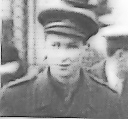
Left: The real JR BLACKMAN
Quite what can be attributed to whom remains to be decided.
The photo below shows an officers uniform not a private.
Lyle was wounded on 28 March 1918 and was sent to 3rd London General Hospital.
On 09 and 10 August 1918 Lyle was wounded at Rosieres not Pozieres and was hospitalised on
the second occasion.
On 26 August 1918 Lyle was in 3rd London General Hospital with severe wounds.
His MC was gazetted on 20 October 1918 and he was invested by King George V at Buckingham
Palace.
Biographical detail
Portrait of Lyle at SLV: L BLACKMAN, assistant Secretary of the South Street Executive
Committee 1911. Portrait. Roberts Collection. Envelope 11. MSS. Ask librarian at desk.
Obituary in "Vic. Hist. Mag", vol.37, no.1, Feb 1966 (SLT 994.5005 V66)
Biographical notes in "Ballarat & district citizens and sports at home and
abroad " by M. M. McCallum, p. 10 (SLT 920.0945 M12)
End Note
The Ballarat Star, Saturday 13 July 1918 - Trove
William Duguid Hill, Mayor of Ballarat 1920 for his third term, was born Ballarat 1858. A
member of the Skipton Street Debating Society that merged with the South Street Society of
which he was first president and within a year or two the first secretary. A councillor since
1905, JP from 1912 and secretary to the Agricultural and Pastoral Society. He conducted a
secretarial and accountancy office with Captain Lyle Blackman MC. The Ballarat Star Saturday
16 October 1920 - Trove On Tuesday 28 October 1919 The Herald announced that Captain Blackman
MC was of the firm Hill and Blackman, auctioneers and agents - Trove
The Herald, Monday 22 May 1922, p. 11 - Trove
The Ballarat Star, Thursday 31 August 1922, p.3 - Trove
Barrier Daily Truth (Broken Hill), Monday 17 August 1945, page 2 - Trove
The Horsham Herald, Tuesday 24 October 1924, p.5 - Trove
Advocate, Tasmania Monday 5 September 1938, p. 2 - Trove
Austin, Ron, Cobbers in khaki, Slouched Hat Publication , McCrea, 2004
1821info11c_1, sheet 14
Margery Joyce Blackman - their only child
The Australian Electoral Roll 1903-1977, available on Ancestry, records their homes and
occupations as:
1942 299 Blackman, Margery Joyce, 46 Victoria ave., Ballarat, home duties - in Ballaarat a
subdivision of Ballarat
At this time Margery had been engaged to Oswald Aloysius COGHLAN since December 1940. The Argus
11 December 1940 records:
Margery Joyce Blackman, only daughter of Mr. and Mrs. L. A. Blackman,
Victoria av, Ballarat, to Oswald A Coghlan, A.I.F., third son of Mr. and Mrs. O. J. Coghlan,
Arranmore, Miners' Rest.
1949 887 Coghlan, Margery Joyce, 119 Willsmere rd., home duties, - in North Kew a
subdivision of Kooyong. Oswald was now a 'manager'.
On 16 April 1953, The Argus records Oswald A COGHLAN as assistant manager of his
grandfather's Ballarat Brewing Company. Oswald A was the third son of OJ COGHLAN of Arranmore,
Miners Rest. By 1968 the couple and their family were back in Ballarat until the last record of
1977. During this time two of their children were recorded.
1968 1494 Coghlan, Margery Joyce, 1430 Sturt st., Ballarat, home duties - in Ballaarat a
subdivision of Ballarat. Oswald was now a 'secretary' again. Their eldest child,
Jillian Margaret, a physiotherapist, was living at home.
1977 1556 Coghlan, Margery Joyce, 1430 Sturt st., Ballarat, home duties - in Ballaarat a
subdivision of Ballarat. Oswald snr. is no longer recorded. Their second child, Oswald Philip,
a salesman, was living at home.
1821info11c_1, sheet 15
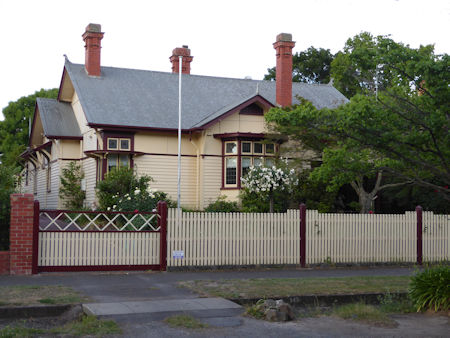
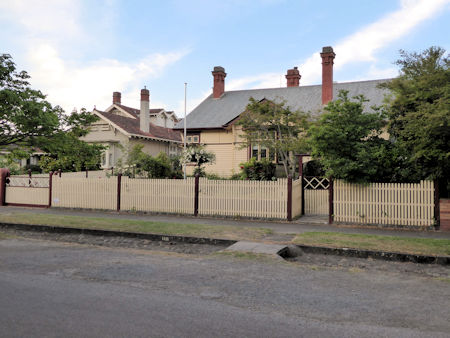
Marjory's home in later life.
Left and below: Margery Blackman's home at 1430 Sturt
Street Ballarat 2015 Source: Author
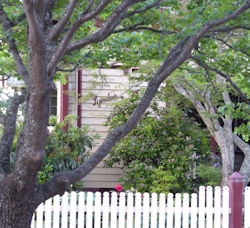
Above: Lynden, 1430 Sturt Street Ballarat 2015
Their second son, James, was mayor of Ballarat between 1992 and 1993.
1821info11c_1, sheet 16
More information 1
AIF No.1 Command DepotPerham Down
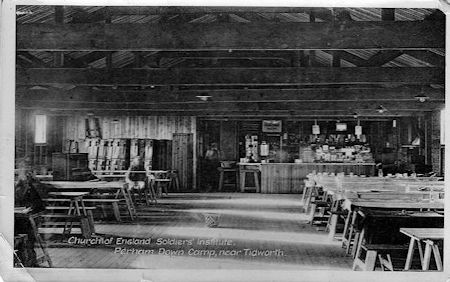
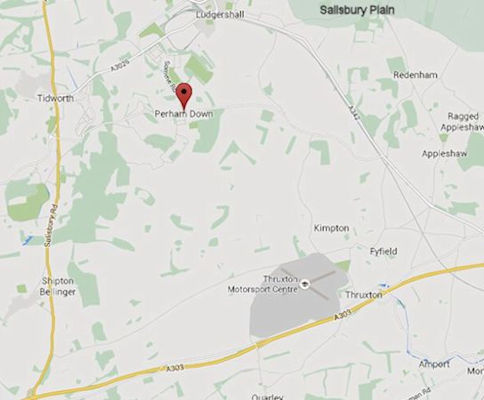
is between Tidworth and Ludgershall was part of the Tidworth Estate purchased by the Army
in 1897 and the following year a camping ground was established. It was one of the more
popular camps due to its close proximity to Ludgershall station. At the outbreak of war
Tent City was home to some of the soldiers and recruits who were concentrated on
Salisbury Plain.
Marquees blew away in winter gales from over their sleeping heads - hence
Perishing Down.
Things improved in 1915 when a hutted camp was built on the site for 5,000
[soldiers] ....
Of four Australian Command Depots in the UK dealing with soldiers who had been
discharged from hospital and needed training before being sent to France. Number 1
was Perham Down. [While the general training in the
Above: Wartime Perham Down soldier's institute
new unit concentrated on toughening-up, the individual training a soldier received was
governed by medical inspections under which he was categorized weekly according to
fitness.]
Source:Perham Down Army Camp (Accessed: 27 July 2015)
Above: A modern map locating Perham Down
1821info11c_1_1, sheet 17
More information 2
The University High School (UHS or Uni High) ...
... was opened in Carlton in February 1910 as the University Practising School was opened
in a former primary school at 1073 in Lygon Street. The name University High School was
adopted in 1913 after the closure of the older private school. The school moved to
purpose- built facilities in Story Street in the Melbourne suburb of Parkville - adjacent
to the Royal Melbourne Hospital, in late 1929. It is a public, co-educational high
school. In addition to providing academic instruction for secondary students, University
High School served as a practising school for university students completing the
University of Melbourne's Diploma of Education (established 1902).
More information 3
Royal South Street Society report 2019
(RSSS)
Royal status was conferred in 1962 for services to the community. In recent times the RSSS
were honoured with five community service awards.. The 2019 annual report, celebrating
130 years records:
The Competitions currently run from July to November each year. They cover 17 theatrical
disciplines of voice, music, and movements, providing some 40,000+ on-stage performance
opportunities for artists from all over Australia. They use four or more venues, including the
historical Her Majesty’s Theatre. However, due to unexpected building delays the Victoria
Festival of Band and Strings had to be held in the Founders Hall. This affected the Societies
income.
The Society is a not-for-profit organisation. The charges for entry and admission only
cover 50% of production costs.
2019 was a profitable year for the ACU (Australian Catholic University) Debating
Challenge Cup with increase entries.
The four day, eleven prized, Chopin & Schimmel Pianoforte Competitions had the number
of entries slightly up in both categories. The Chopin competition attracted nine entries.
Speech and Drama had an overall reduced number of competitors. The three under 14 groups
were well supported. Six prizes were awarded.
Nineteen Brass and five Concert Bands competed at the Founder's Theatre over an August
weekend. The contest was judged by Brian Hurdley who had worked with leading UK bands.
The eleven sections of the Classical Vocal competition attracted 62 entries in three
under 18 groups. Despite the lowest number in five years the standard was still good. There
was still no senior section. There were 45 entries in the Primary Age groups and 44 in the
Secondary Age group, performing to an audience of 380 over two days.
There was a high standard in the Festival of Bands and Strings. The String Section and
Solo Sections were at capacity. The Stage Band increase in numbers but the Brass Solo was not
as well supported.
Contemporary Vocal competition ran for six full days. Gospel/RnB/Soul and Rap had been
added.
The full programme of 32 performers in the Showbiz Cinemas Mi Sound section were allocated
a minimum of 20 minutes performance time for solo and groups. The evenings were fun but the
audience, in general, appeared to be the performers themselves.
The 1,996 entries in the sixteen day Energetiks Dance Competition saw the introduction of
Troupes and Groups categories with there being enough competitors in the U12 Contemporary
Solos that two divisions performed.
RAVC Goldfield Resort The Arts for All entered its third year of competition with 85
competitors, an increase of 17. The adjudicator was experienced in adjudicating for people
with special needs.
Without a major sponsor the Calisthenics Competition became the Australian Calisthenics
Competition as a national club competition but Championship teams chose not to enter and are
unlikely to return to the RSSS as State Titles are held at the larger Palis stage. This event
had been the Societies biggest drawcard with the largest audience. Spread over 22 days, there
were 3,637 competitors with 1,822 items from 224 teams. The 13 Interstate Teams were down
from 29. Historically Ballarat had always been the pinnacle of the Calisthenics season.
There were 5,500 entries with 28,000 feet on stage and over 12,000 audience through the
door.
The 2019 income was up to A$791,643 and the expenses were down to A$842,628 so reducing
the operation loss by 73%. With net assets of A$872,661, this was a decrease of 1.5%.
Ballarat's Avenue of Honour
Trees in Ballarat's Avenue of Honour (Remembrance Drive) were planted by the
ladies of E. Lucas Clothing Factory in honour of all the men from Ballarat and district
who fought in the Great War. Source: Karen Walsh
Ballarat Councillor Glen Crompton (no relation, but one of three Crompton families in old
Ballarat), writes, with pride:
'At 22km Ballarat boast the longest First World War commemorative avenue in the world
and the Arch structure is acknowledged within Paris' Grand Arc. The original tree
plantings were undertaken between 1917 and 1919. Unfortunately, The Avenue fell to
neglect over the years. Trees were lost to harsh natural events, road building, and
vehicle crashes. Many of the plaques identifying the trees were damaged or pilfered. In a
final insult, the avenue's full length was severed 20 years ago as a result of the
construction of a freeway.'
'Ballarat's Arch of Victory and Avenue of Honour Committee has spent decades quite
simply adhering to the remembrance axiom, 'We will remember them'. By 25 April 25
2015, the centenary of ANZAC day, the Avenue had been restored to its full complement of
3801 tree, each and every one bearing a commemorative plaque. The Arch had been fully
restored and rejuvenated. Incredibly, The Avenue was re-connected to its full length
after the Road Authority constructed a magnificent overpass for the freeway. This was not
merely a bridge, rather a spectacular engineering and landscaping feat which enhances The
Avenue'.
Avenue of Honour bypass unveiled (Accessed: 01
August 2015)
'And so it was at dawn on the 25 April, 25,000 citizens of Ballarat, about a
quarter of the entire population, remembered them a hundred years on. The Honour Party
comprised of the descendants of the 8th Battalion 8/7 Royal Victorian Rifles.'
Anzac Day dawn service in Ballarat 2015 (Accessed:
01 August 2015)
18219nfo11c_1, sheet 18
More information 5
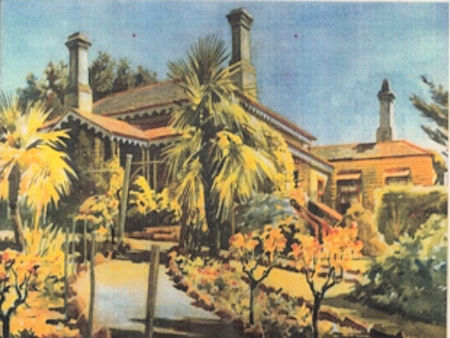
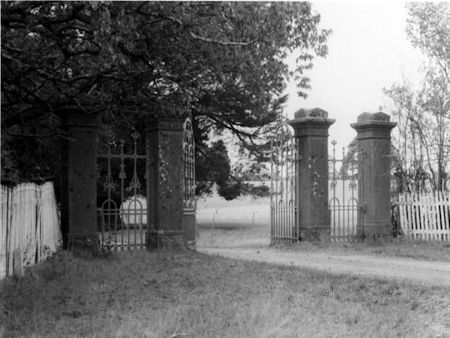
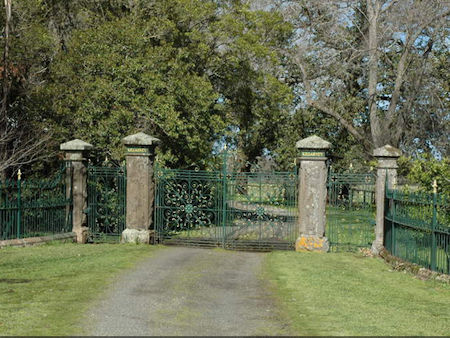
Arranmore - 80 Howe Street, Miners Rest
The entry gates and associated picket fencing and planting, the form of the existing entry
road and planting from Howe Street to the entry to the house garden have significance as
remaining items of the development of a family farm and horse stud of the nineteenth and
early twentieth century. The farm was first owned and farmed from 1854 by Harry Mount who
was well known in horse riding circles in Ballarat and a friend and partner of Adam
Lindsay Gordon in the horse stables that operated from Craig's Hotel. The property was
then owned from 1875 to 1909 by Stephen Holgate a stock and station agent with horse
breeding and owning connections. From 1909 until 1954 the property was owned by prominent
brewer and racing identity Oswald Coghlan. The date of construction of the gates
is as yet undetermined but appears to date from at least 1910 and they have been a major
landmark on the road to Miner's Rest. The roadway appears to date from the mid to late
nineteenth century providing the entry to the house and garden area. The main house was
gutted by fire in the mid twentieth century and the remaining stable and farm buildings
have been substantially altered and therefore the significant fabric remaining to
interpret the site are the gates, driveway and ponds/swimming pool.
The gates are historically significant for the association with a substantial and affluent
family farm and horse stud development in the late nineteenth and early twentieth century.
The property is associated with three owners with prominent association in horse breeding
and racing circles in Miners Rest and Ballarat, Harry Mount, Stephen Holgate and Oswald
Coghlan.
The entry gates are aesthetically significant for demonstrating late nineteenth and early
twentieth century design qualities, being the substantial scale, materials and design of
the stone pillars and cast iron gates. The single piece of basalt for the main section of
the gate pillars is rare. The flat nature of the castings for the gates and the sinuous
floral nature of the pattern are unusual and distinctive. No similar design has been
found in the region. The flanking timber picket sections of fence, although reconstructed
are part of the original entry and complement the central gates. The entry is a landmark
in the region.