 |
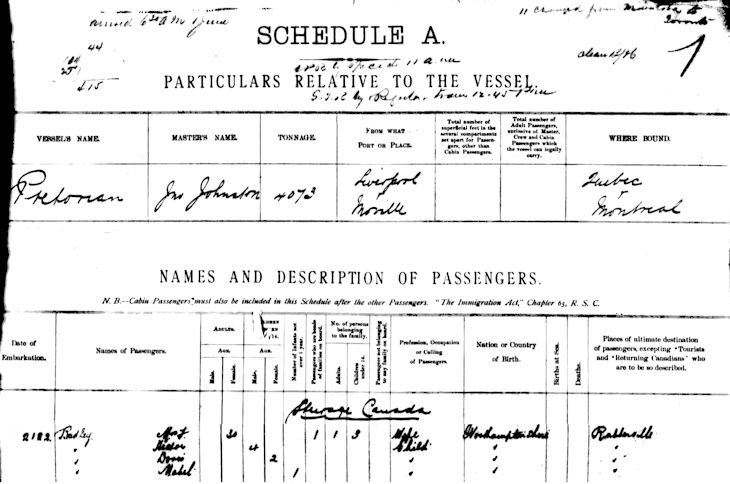
| Above: A composite image of the Bradley's emigration to1903 |
1807Info3k: for James Crompton |
Hector Percy BRADLEY was born on 17 September 1898& in Kettering, Northamptonshire (GRO ref: Kettering 3b 177), the eldest child of the Bradley family.
1901 Census   Sun/Mon 31st March/1st April 1901
Source:       FHL Film  TNA Ref RG13
              Piece: 1446; Folio: 17; Page: 3; Sched:
Dwelling:     17 Kettering Road
Place:        Broughton, Northamptonshire, England

Name                Rel  Mar Age  Occupation                                       Status  Birthplace
Fred Bradley       Head   M  31   Engine & Machine Maker - iron turner and fitter  Worker  Northants, Cransley
Elizabeth Bradley  Wife   M  27                                                            Northants, Northampton
Hector P Bradley    Son       2                                                            Northants, Broughton
Doris M Bradley     Dau       5mo                                                          Northants, Broughton
Two years later, on 3 June 1903, part of the family emigrated, including Hector to Canada in 1903.
|
| Above: A composite image of the Bradley's emigration to1903 |
The Pretorian left Liverpool on 05 June 1905 bound for Quebec and Montreal with Elizabeth BRADLEY (Mrs F Bradley), Hector, Doris and Mabel as passengers. It is assumed that Fred had already emigrated, but at this time there is no obvious record of his sailing. The final column records their final destination, which, part from beginning with 'R' and ending in 'ville' is illegible. It is assumed this is an industrial area of Quebec province.
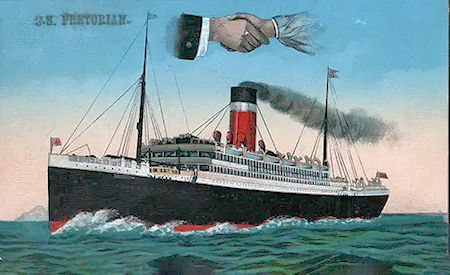
| Built
in 1900 for the Liverpool-Quebec-Montreal route the 14 knot
Pretorian took 600 steerage passengers. Right: Allan Royal Mail Line's SS Pretorian |
 |
By the time of the 1911 census the family was complete and living in a home in Stadacona, Quebec, an area north of the Charles River where the original French settlers landed in 1534.
1911 Census of Canada Date: 1 June 1911 Page: 3; Line: 6-13;
Address: Province: Quebec District: 188 Quebec East; Sub district: 41 St Malo Ward
Location: Stadacona; Dwelling: 16

Name            Rel  Sex Stat  Date of  Age Place of  Nationality Religion  Occupation  Location  Hours  Earning a  Education   Lang
                               birth        birth                                                        week 1910  Read Write  Common
Fred Bradley    Head  M   M    Jan1870  41  England   Canadian    Baptist   Tool maker  Arsenal   60     800        Y    Y      Eng
Eliz Bradley    Wife  F   M    Apr1873  38  England   Canadian    Baptist   None                                    Y    Y      Eng
Hector Bradley  Son   M   S    Sep1898  13  England   Canadian    Baptist   None                                    Y    Y      Eng
Doris Bradley   Dau   F   S    Oct1900  11  England   Canadian    Baptist   None                                    Y    Y      Eng
Mabel Bradley   Dau   F   S    Dec1902   9  England   Canadian    Baptist   None                                    Y    Y      Eng
Bessie Bradley  Dau   F   S    Mar1905   6  Quebec    Canadian    Baptist   None                                    Y    Y      Eng
Nelly Bradley   Dau   F   S    Nay1906   5  Quebec    Canadian    Baptist   None                                    Y    Y      Eng
Norah Bradley   Dau   F   S    Sep1908   3  Quebec    Canadian    Baptist   None                                    N    N      Eng
Enlistment
| On 03 May 1916, Hector enlisted into the 42nd Battalion, The Royal Highlanders of
Canada, The Black Watch of the of 7th Brigade, 3rd Division. His address was given as
Domaine Lairet, Quebec, so it is possible that this was the location of the 1911
Census home. His Attestation Papers show that he was a student and he had been in the
Cadet Corps whilst at High School.
Right: Cap badge of the 42nd Battalion, the Royal Highlanders of Canada, the Black Watch |
 |
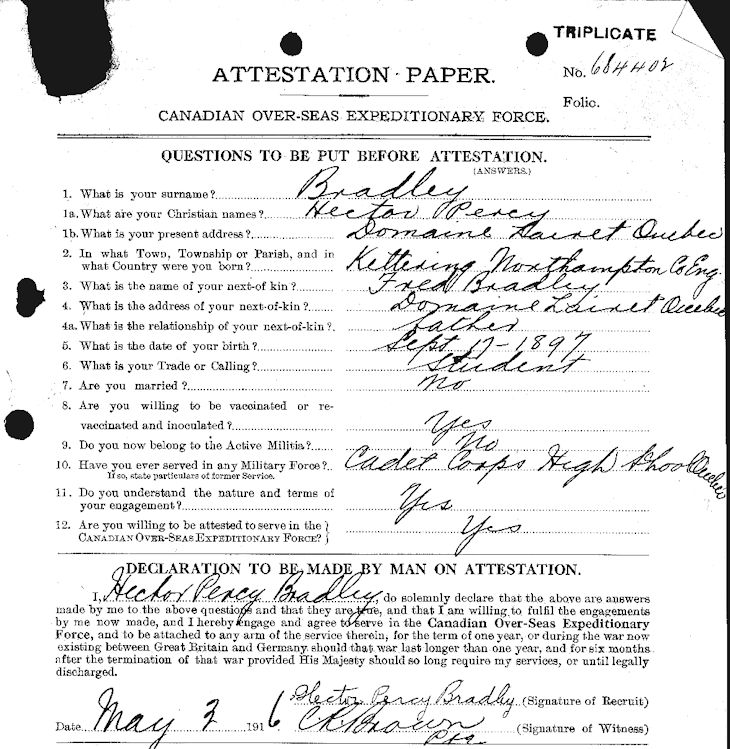 |
| Above: A cropped copy of Hector Bradley's Attestation paper |
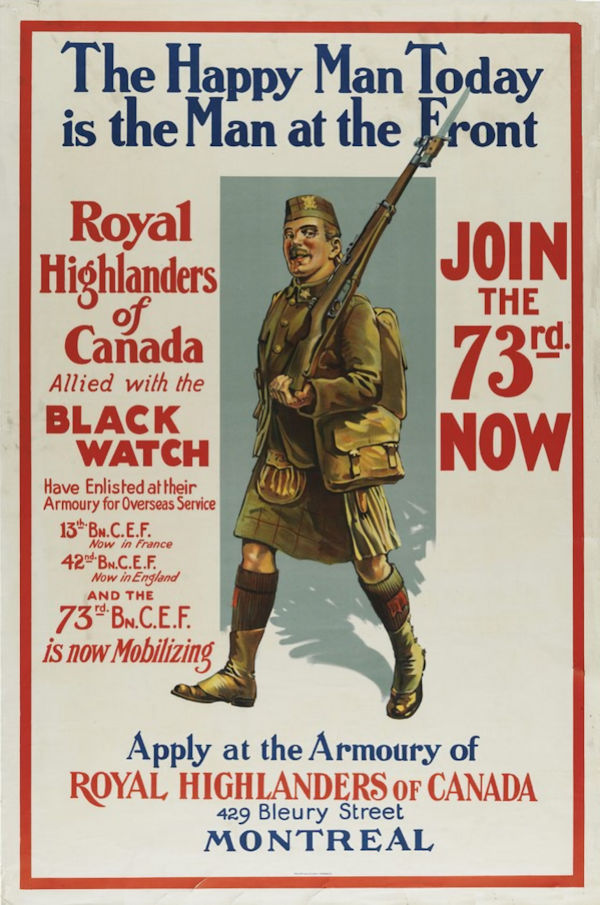 |
| Above: A Black Watch recruiting poster. Note the 42Bn is already overseas. |
Going overseas
Hector's Attestation Papers show that he enlisted in Quebec on 03 May 1916. There is no date for Hector joining his Battalion in France. Its War Diary shows when reinforcements arrived. Given that the Battalion’s training took four months it is likely that he arrived in France after October 1915 as shown in the reinforcements table:
| Date | Number | Location |
| 04 October 1916 | 34 | Chalk Pits (Tara Hill) |
| 10 October 1916 | 3 | Warloy |
| 16 October 1916 | 31 | Rideaucourt |
| 01 November 1916 | 10 | Neuville St.Vaast |
| 08 November 1916 | 7 | Neuville St.Vaast |
| 14 November 1916 | 7 | Bois-des-alleux |
| 22 November 1916 | 22 | Neuville St.Vaast |
| 08 December 1916 | 150 untrained | Bois-Des-Alleux |
| 03 January 1917 | 250 | Bois-Des-Alleux |
| 11 March 1917 | 43 | Divion |
| 21 March 1917 | 53 | Villers au Bois |
| 23 March 1917 | 3 | Villers au Bois 1 |
Background to the attack
The successful attack on Vimy Ridge, part of the First Battle of Arras, was wholly undertaken by the four Canadian Divisions of 1st Army, under General Sir Henry Horne. The Canadian succeeded where the bitter French attacks had failed to break the grip of the German army.
“Vimy Ridge is a considerable height of land running in a south-westerly direction between the cities of Lens and Arras and rising at its highest point to an elevation of 475 feet (145m) above sea level. Approaching it from the west the ground rises very gradually to the crest of the Ridge then falls sharply as an escarpment to the plain below. At its northern end the descent to Givenchy and Petit Vimy is abrupt and marked by several deep re-entrants; to the south towards Arras the slope is not so steep. La Folie Wood covers much of the southern slope. The top of the Ridge commands a magnificent view of the valley of the Scarpe and of the Lens/Loos countryside for miles around. Sir Douglas Haig's decision to take it at the opening of the Spring Offensive in 1917 was made originally with the primary object of securing the left flank of operations which it was proposed to undertake on the south bank of the Scarpe. His intention was to exploit the success of the previous autumn on the Somme by pinching off a salient occupied by the enemy between the Scarpe and the Ancre. The great German withdrawal from the Somme area in the early weeks of 1917 necessitated certain modifications of the original plan and the task of the British Army finally was to assist the French by attracting as large hostile forces as possible to its front before General Nivelle's ill-starred offensive on the Aisne.Right: Map locating Vimy with the Canadian area marked in red |
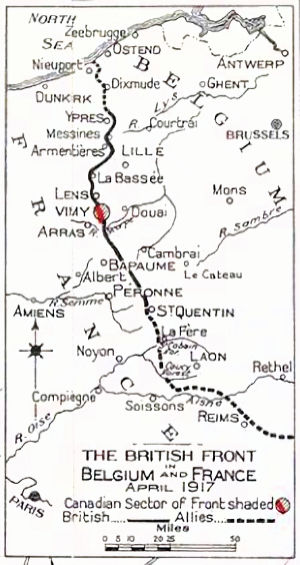 |
[…] [P]reparations for the offensive had been going on for months and the operation stands out as the most thoroughly organized and completely rehearsed undertaking in which the Canadian Corps was ever engaged. […] By the end of March vast stores of ammunition and material of all kinds required for the offensive had been accumulated immediately behind the front.
Artillery of all calibres had been assembled in great strength and for three weeks prior to the date selected for the attack systematic destruction of the enemy's defensive system. […] [T]here was one gun for every eight yards of frontage. […] During the eight days immediately preceding the attack 553,000 rounds representing 13,005 tons of shells were fired. On the day of the attack, ammunition expenditure was 212,000 rounds, representing 4,299 tons of shells.” 2
The attack
The 7th Division attacked on a three battalions front, in order of seniority: Royal Canadian Regiment (RCR) on the right; Prince Patricia's Canadian Light Infantry (PPCLI) and 42nd Battalion. The 11th Brigade was on their left.
On Saturday 07 April/Sunday 08 April 1917, Battalion War Diary records "A" and " B" Coy moving from Villers au Bois to the shelter of the Grange Subway with "A" Coy exiting first. "D" Coy moved to the Empire Redoubt and went overland to the assembly trenches. "B" Coy assembled to the right of Ewart Trench from Duffield Trench to Observation Line and "D" Coy from Duffield Trench to Finlay Trench, 3 which are not marked on the trench map. The final left fork of Grange is known as 'Black Watch' tunnel and was gated off.
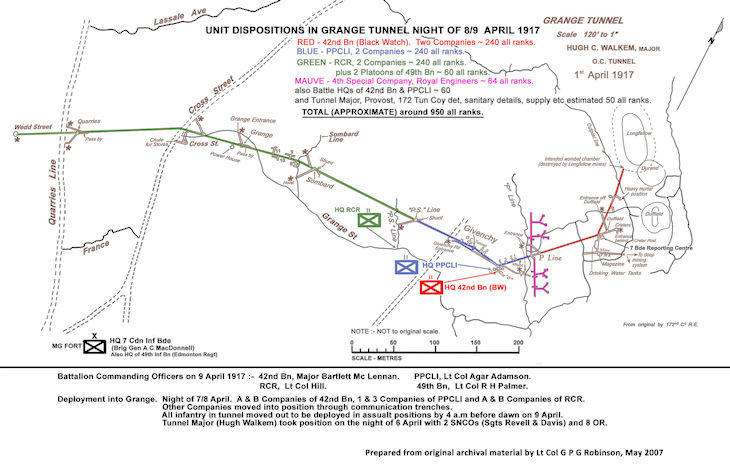 |
| Above: Unit disposition in Grange Subway night of 8/9 April 1917 Courtesy: Lt Col. GPG Robinson, Durand Group Click on the map to open a scalable pdf map in a new window |
In total twelve subways of 275-1,720m length, were constructed to convey the Canadian troops to their jump-off trenches safe from German observation on the ridge.
The artillery opened fire at 05.11. Gunner Frank Ferguson wrote:
Was awakened this morning before daylight by a terrific bombardment. What a sight in the dim light as the guns put down the barrage for the boys to go over and try for Vimy Ridge. What a terrible racket as all the guns on the front blended into one continuous roar and the flashes from them made the effect of a great electrical storm. 4
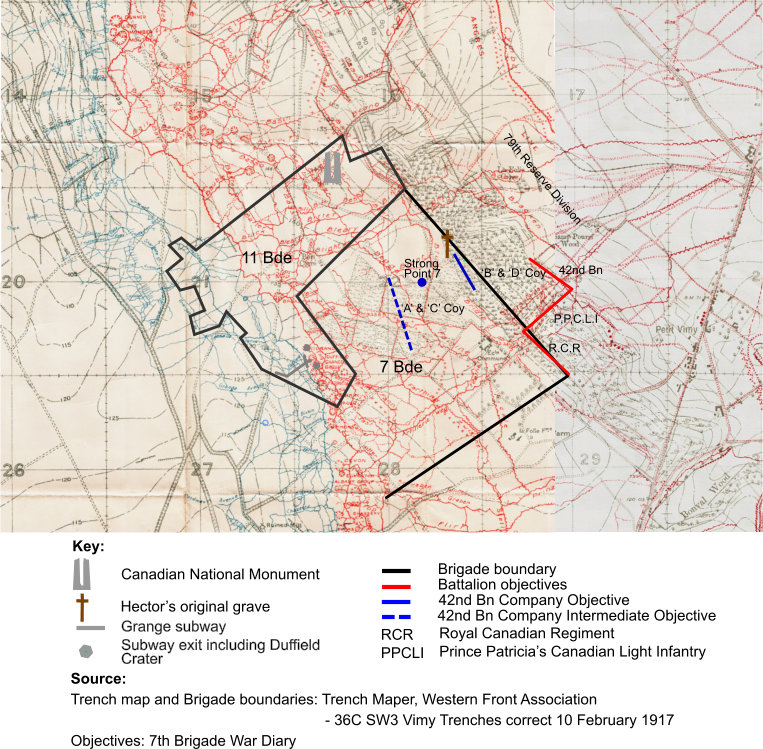 |
| Above: A trench map showing the distribution of some troops on Vimy Ridge on 09 April 1917 Click on the map to open a scalable pdf map in a new window |
General Sir Henry Horne wrote:
On the morning of the 9th April [the front] extended from just north of the village of Croisilles, south-east of Arras, to just south of Givenchy-en-Gohelle at the northern foot of Vimy Ridge, a distance of nearly 15 miles. […]The attack was planned to be carried out by a succession of comparatively short advances, the separate stages of which were arranged to correspond approximately with the enemy's successive systems of defence. As each stage was reached a short pause took take place, to enable the troops detailed for the attack on the next objective to form up for the assault.
"B" and "D" Companies crossed the craters close behind the first wave, passed on over the intermediate objective in perfect order and by 8 a.m. Major Pease, commanding the front line, was able to report that the objective had been reached at all points on the Battalion front and consolidation was under way. 5
The artillery opened fire at 05.11.
At 5.30am, after enduring the horrific conditions of the preceding hours, these men were sent forward. As the assault waves emerged, the mind had to cope with a different set of sensorial rules, as the claustrophobic subway gave way to the open trench, the experience of going over the top and then finally the chaos of the senses in a No Man’s Land covered in April snow, and the unknown German trenches beyond. 6
At 05.30 it was reported that the Battalion was making continuous progress, reaching the intermediate objective at 06.02 with the Battalion meeting feeble resistance. By the time the Battalion had reached its final objective at about 08.00, it was reported that the escarpment of La Folie Ridge was void of enemy, though reinforcements were gathering on the Douai Plain.
The first enemy artillery barrage of 4.2inch and 5.9inch high explosive (HE) shells landed between the P Line and the O(bjective) Line and on Beggar Trench. It continued in the neighbourhood of the O Line. 7 On the following day, Tuesday 10 April 1917 artillery fire was recorded in the War Diary. By 04.00, there had been considerable shelling mostly falling 20 to 30 yards (18-27m) from front line. Intermittent High Explosive (HE), probably 5.9 inch shells fell on Beggar and Blue Trenches and two hits on Blue Trench near Strong Point 7 caused considerable casualties. Artillery shells fell on the north-east edge of La Folie Wood at 08.55 and on Bracken, Buck, Fillip, and Artillery Trenches. At 08.25 a message was received to say there were still 25 stretcher cases waiting to be evacuated and no stretchers were available.
The final objective was reached and consolidation started at 08.00. At noon the Battalion was holding Beggar Trench to Bitter, Blunt, Blighty and Blue Trenches and the flanks had been secured. The afternoon was 'quiet' with operations against Hill 145 were planned for the night.
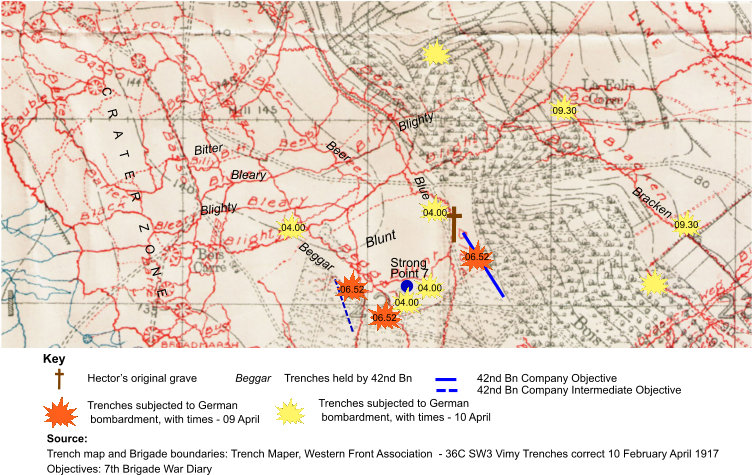 |
| Above: A trench map showing 42nd Battalion's objectives and the location of Hector's death Click on the map to open a scalable pdf map in a new window |
On Wednesday 11 April 1917, the 42nd Battalion reported 291 Other Ranks as casualties. At 21.25 Brigade received a message ‘The dead will be buried tomorrow. Graves being dug today.’
Hector's death
The author would suggest that Hector, from the location of his exhumation was a member of either “B” or “D” Coys, who were tasked with capturing the Objective Line. As Hector was exhumed from the extreme left of the Objective Line, it is more likely to be “D” Coy. However, the Battalion’s War Diary does not distinguish between Companies. It does describe the trenches captured, on Monday 09 April 1917, in getting to the Objective Line. These included Beggar, Blunt, Bitter and Bleary, reported captured at 20.36.
Hector’s ‘Circumstances of Death Register’ card records his death by ‘enemy shell fire’. On on 09 April, the date of his death, the Battalion’s War Diary records enemy 4.2 and 5.9 HE artillery fire at 06.52. This fell on the between the P. Line and the O(bjective) Line and continued on the O Line. On Tuesday 10 April at 04.00, ‘considerable shelling of intermittent high explosive, probably 5.9 inch’, fell on Beggar and Blue Trenches, near Strong Point 7, ‘causing considerable casualties’.
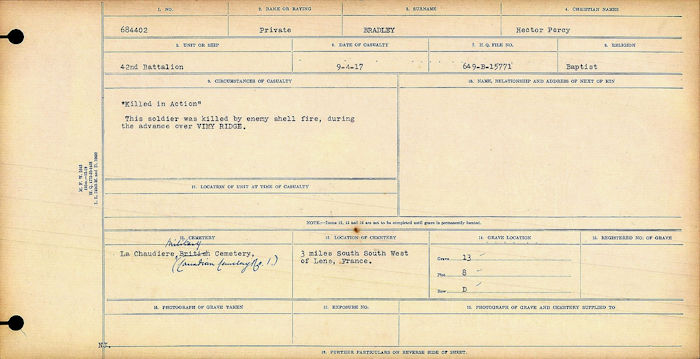 |
| Above: From Hector's Canadian papers. H Circumstances of Death Register listing his 'Circumstances of Casualty' as 'Killed in Action' '... by enemy shell fire during the advance over VIMY RIDGE. 9-4-17 And his Cememtery as La Chaudiere Military Cemetery Grave 13, Plot 8, Row D |
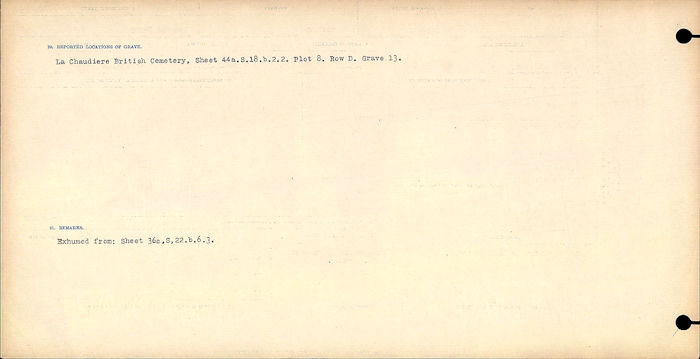 |
| Above: From Hector's Canadian papers - obverse. Giving his co-ordinates of exhumation as 36c.S.22.b.6.3 |
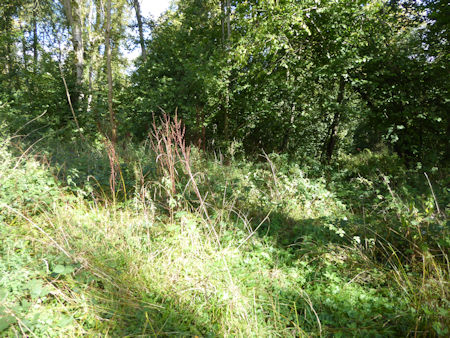
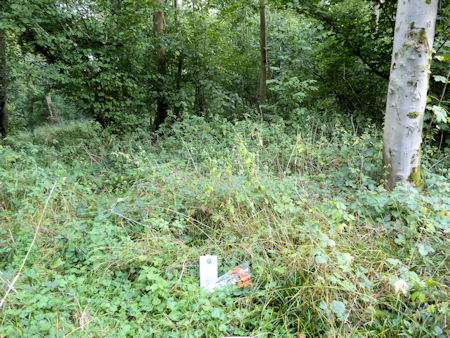
| Hoverbox Photo Gallery - Vimy Ridge grave site Author: 21 September 2018 This feature does not function correctly on phones and tablets |
|
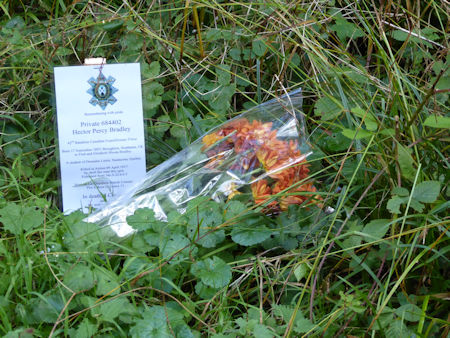
1. The overgrown 'avenue' leading to the grave site 2. The grave site by the coordinates |
on his papers 3. Memorial card and flowers left by the author |
| 1 | 2 | 3 |
|
|
|
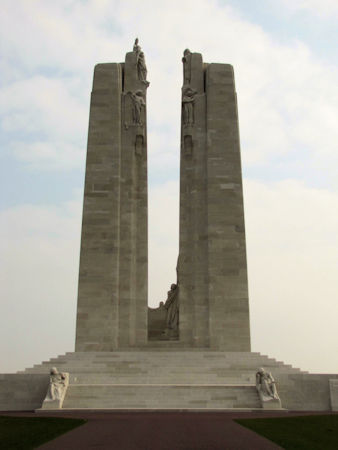
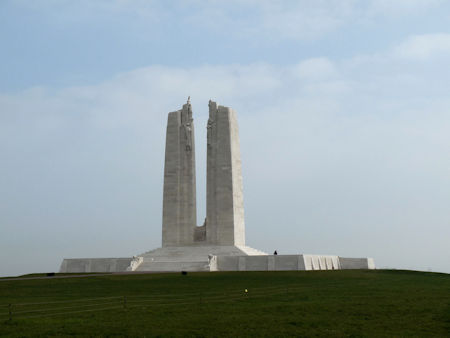
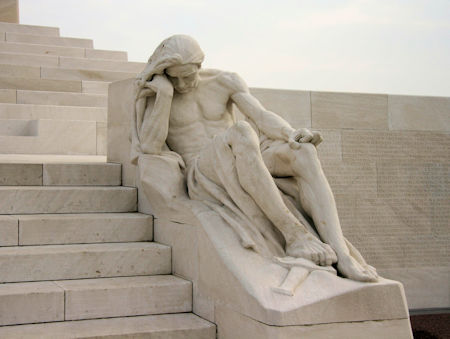
Hoverbox Photo Gallery - The Canadian National Memorial Hill 145 - Author: 28 March 2011
This feature does not function correctly on phones and tablets
|
|
|
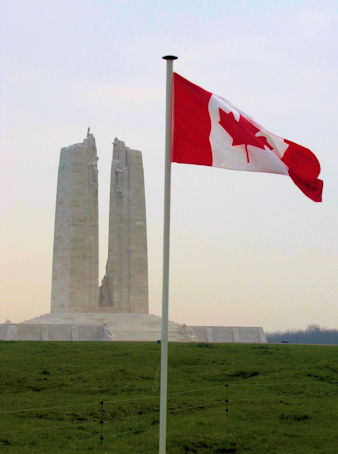
|
La Chaudiere Military Cemetery
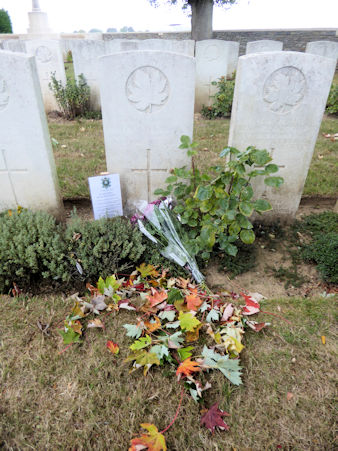
Hector's body was exhumed and reburied in La Chaudiere Military Cemetery, located at the foot of the escarpment, off the N17 some 5km from the Vimy Memorial. It contains 908 headstones, of which 594 are identified. Hector is buried in Plot VIII, Row D, Grave 13, surrounded by maple trees
Hoverbox Photo Gallery - La Chaudiere Military Cemetery - Author: 21 September 2018
This feature does not function correctly on phones and tablets
|
1. Hector's grave 2. Stone of Remembrance and graves |
3. Cross of Sacrifice 4. Hector's grave with maple leaves |
| 1 | 2 | 3 | 4 |
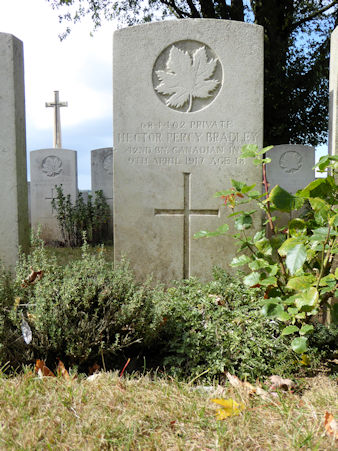
|
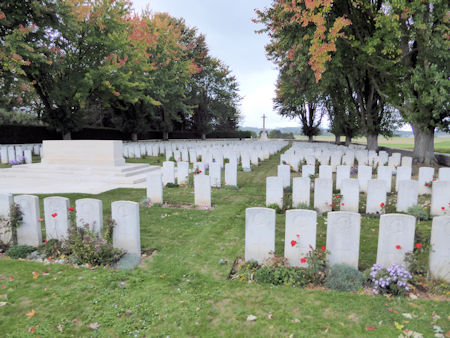
|
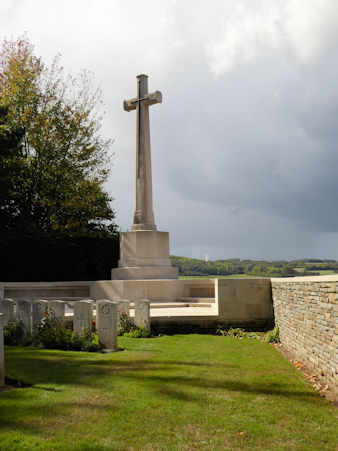
|
|
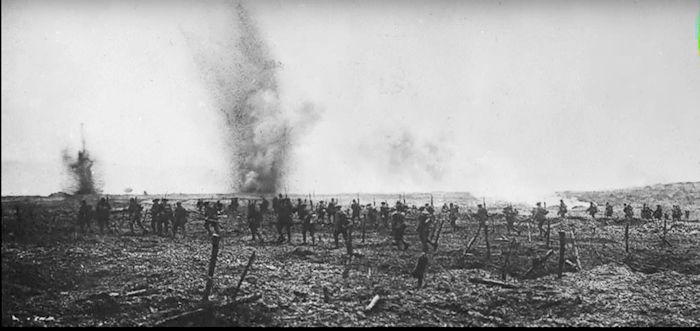 |
| Above: The Canadians attack at Vimy Source: Library and Archives Canada – MIKAN 3404765 |
End notes
Sources
|
 |
|||||||
| This page was created by Richard Crompton and maintained by Chris Glass |
 |
Version A3 Updated 06 June 2025 |
||||||


