 |
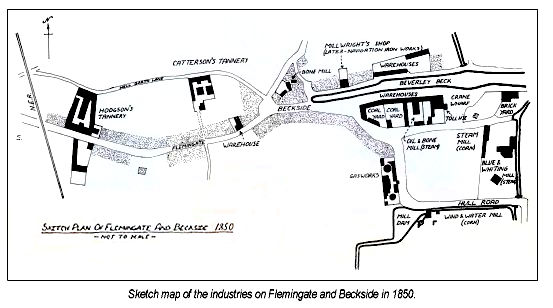
| Above: A detailed view of Beckside, Beverley 1850 map,
centred on Crane Hill, showing the two coal yards and other industry Click on the map to open a scalable pdf map in a new window |
1817 Info 2b for Martha Crompton |
James Robert LOWTHER
A James Robert LOWTHER was born in the fourth quarter of 1879 (GRO ref: Beverley 9d 97). However, his Canadian Attestation papers record his birth as 10 Aug 1880 and 1880 corresponds to the 1891 census with a variation. He is recorded in the 1891 census - see 1817info2a.
Beckside, Beverley was a place of industry, developed because of the Beverley Beck link to the Hull Canal. There were two coal yards, as shown on the 1850 map.
|
|
| Above: A detailed view of Beckside, Beverley 1850 map,
centred on Crane Hill, showing the two coal yards and other industry Click on the map to open a scalable pdf map in a new window |
In the 1901 census one of these belonged to James LOWTHER. This suggests that on the death of John LOWTHER on 28 May 1896, the coal, brick and tile merchant business was passed to his son James Robert LOWTHER. There is some doubt about the business relationship between the LOWTHERs and the STUARTs Although the 1901 census declared James Robert LOWTHER as a merchant, in 1900 there appeared a series of 'Notices to the public', that ran for several weeks in all the Beverley newspapers, announcing Rachel Oxley LOWTHER's partnership with Archibald R STUART. This begs the question of who took responsibility for the Lowther's business on the death of John LOWTHER: Rachel the eldest child or James the son. Further: were there one or two separate businesses. At the moment there is no advertising to show either case. Similarly there is no obvious evidence of James Robert LOWTHER selling his business or being made bankrupt.
1901 Census   Sun/Mon 31st March/1st April 1901
Source:       FHL Film  TNA Ref RG13
              Piece: 4462; Folio: 77; Page: 11; Sched: 85
Dwelling:     Beck Side
Place:        Beverley, Yorks ER, England

Name                   Rel  Mar Age  Occupation                     Status   Birthplace
James Robert Lowther  Head   S   21  Coal & Brick & Tile Merchant  Employer  Yorks, Beverley
John Robert was still in residence, in August 1902, when the Beverley Independent reported a theft from his Beckside House in the coal yard.
| Beverley Independent, Saturday 16 August 1902, page 5 |
|---|
| At the Guild Hall yesterday, before the Mayor and Colonel Cussons, a man who gave his name as James Myers (24), and said he belonged to Scotland, was charged with stealing a pie from the house of Mr. J. Lowther, Beckside.- Mr. Wm. Oldfield, an employee of Mr. Lowther, who lives in the coal yard, said that about 6-15 yesterday morning he saw prisoner come out of Mr. Lowther's back door. He called to him, but he ran but he ran away, dropping a fruit pie in his flight. Prisoner was detained and brought into custody by PC Knowles. —Mr. J. Lowther, who said he did not wish to press the charge, stated that the door was not locked from the inside, but was closed with a sneck. – Mr Mills observed that to lift a latch of any kind was burglary. – Witness went on to say that there were several articles of food in the dairy – PC Knowles said that when arrested prisoner became violent – Accused admitted the offence and had nothing to say in mitigation. – Supt Knight state that prisoner might have been charged with burglary, but fortunately for him the lesser charge of larceny had been preferred. The bench observed that men of this kind going about were a great danger to householders. He would have to go to prison for six weeks with hard labour. |
The second registered Beckside coal merchant was Archibald Stuart, who is to feature in the Lowther coal business. He lives 37 enumerator dwellings from John Robert LOWTHER.
1901 Census   Sun/Mon 31st March/1st April 1901
Source:       FHL Film  TNA Ref RG13
              Piece: 4462; Folio: 80; Page: 17; Sched: 122
Dwelling:     Beckside
Place:        Beverley, Yorks ER, England

Name               Rel  Mar Age  Occupation           Status    Birthplace
Margaret Stuart   Head   S   48  Living on own means            Scotland
Isabella Stuart    Sis   S   46  Living on own means            Scotland
Archibald Stuart   Bro   S   40  Coal Merchant        Employee  Scotland
James Robert LOWTHER in Canada
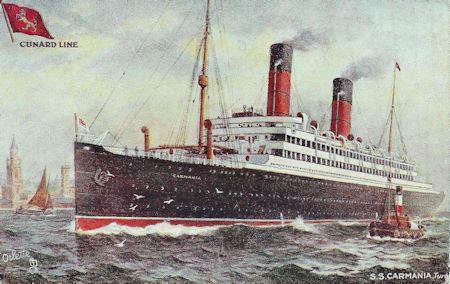
James Robert LOWTHER departed from Liverpool on 28 May 1903, aged 23, bound for Montreal on the SS Bavarian, bound for Montreal. It is assumed he handed the coal business to his sister Rachel Oxley LOWTHER.
 |
| Above: A composite image of James Robert Lowther
emigration Click on the image to open a larger pdf image a new window 1 |
Enlistment in to the Canadian Expeditionary Force
On 01 December 1915, a James Robert LOWTHER, aged 35 years and 3 months and born 10 August 1880 in York England, a rancher by trade, enlisted in Victoria BC into the 1st Canadian Pioneers Battalion of the Canadian Expeditionary Force (CEF), as number 48755. He quotes his next of kin as his maternal aunt, Miss R OXLEY of General Delivery, Melita, Manitoba.
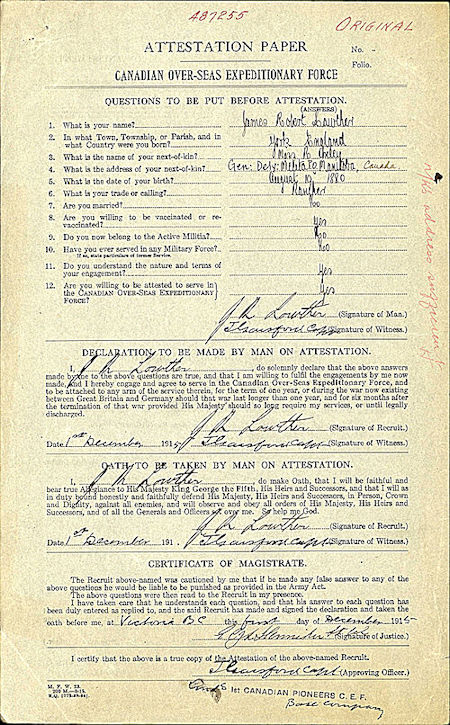 |
| Above: James Robert Lowther's enlistment 2 Click on the image to open a larger pdf image a new window |
A chronology of war 3
 |
| Above: 9/CRT at Rexpoede rail junction Undated 'trench' map |
The 2.25 miles of Track re-laid was all broken by shell fire, which also necessitated extensive remaking of grades and filling many and very large shell hole. The forward construction parties were daily shelled off their work. Casualties from enemy weapons, 1 Officer wounded, OR 4 killed in action 5 died of wounds, 44 wounded, 12 of which were gassed.
8/11/17 140 OR and 4 Officers and 75 OR and 1 Officer 5 Australians on construction and maintenance C2 C2b C2c lines
B [Coy] 138 OR and 7 Officers and 157 OR and 3 Officer 5 Australians ballasting and general maintenance of C2 C2d C2f Lines
C [Coy] 158 OR and 6 Officers and 197 OR 33 Labor Coy 180 OR 27 Australians and 136 OR 118 Labor Coy on maintenance Heelfine Yard. Y1 Y2 and Y5 lines Pacific Yard to Vancouver Siding Vancouver Siding to junction B6 Y1 Upudtion of D6 yard.
D [Coy] Standing by in camp Casualties 1 OR killed
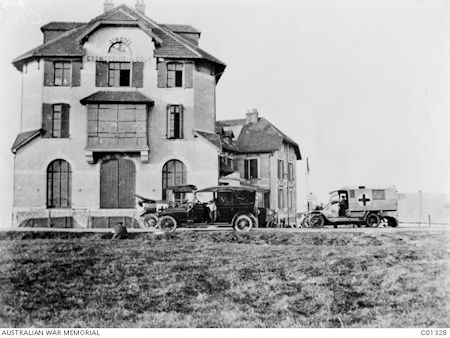
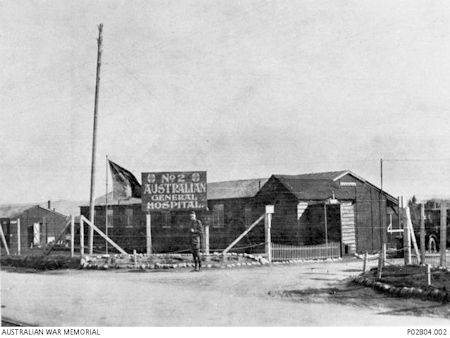
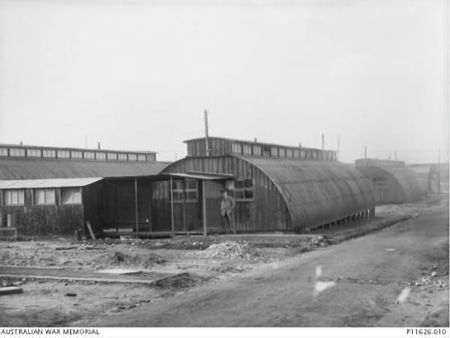
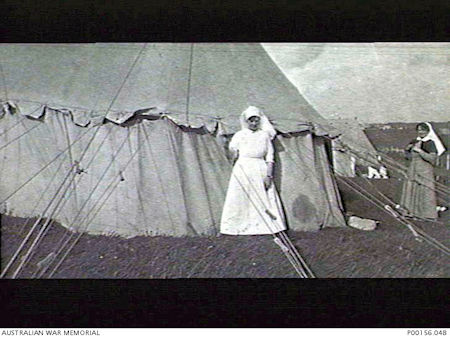
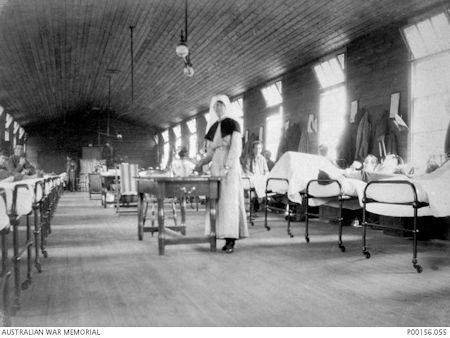
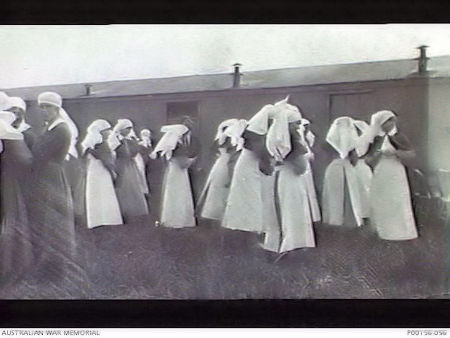
Hoverbox Photo Gallery - 2/Australian General Hospital 1916
This feature does not function correctly on phones and tablets
|
1. 2/AGN in the Grand Hotel du Golf et Cosmopolite 2. Entrance to 2/AGH |
3. 2/AGH buildings 4. Two nurses at the newly occupied Wimereux site |
| 1 | 2 | 3 | 4 |
|
|
|
|
|
5. Interior of a ward 6. Nurses outside huts |
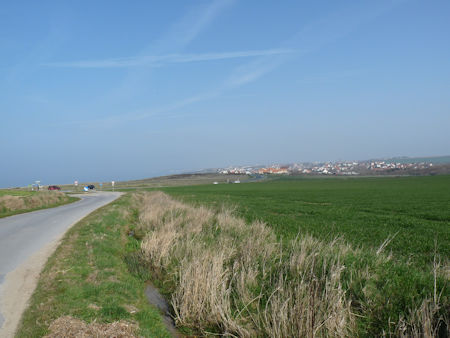
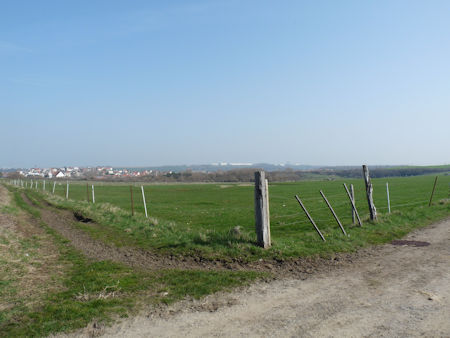
7. 2012 site of 2/AGH 8. 2012 site of 2/AGH |
| 5 | 6 | 7 | 8 |
|
|
|
|
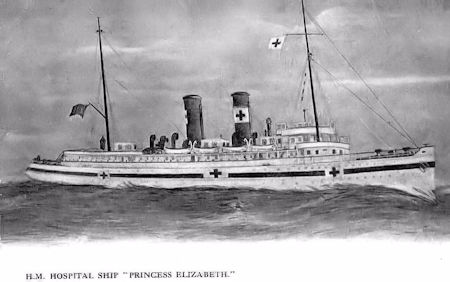
Right: Hospital ship Princess Elizabeth |
 |
 |
| Above: Beaussart trench map 57SE Beaumont, Bouzincourt,
Ovillers showing railways and sidings worked by 9/CRT Trenches correct 17/7/18 Click on the map to open a scalable pdf map in a new window |
Right: RMS Carmania |
 |
His will
In his will of 16 February 1918 and on his US Border Crossing card of 12 December 1927, he records his sister Mrs Rachel Oxley STEWART, of 'The Pines', Tadworth, Surrey as his beneficiary of his real estate - OXLEY being his mother's maiden name.
James' personal estate comprising of his library, collection of pictures etc are bequeathed to Mrs R,O, STEWART of Tadworth, England.
Back in Canada
The 1921 Canadian census records: 7
1 June 1921
Address: Veterans of France Club, 912 Douglas Street, Victoria, BC
Build type: Stone, brick, wood, brick veneered, plaster+lime, plaster+cement: Brick
Type: Family, household, institution: Institution  Number of rooms:
Tenure: Owned/rented: Rented; If rented cost per month: $150

Name              Rel. Sex Status  Mar Age   Place of   Year of       Year of
                                             birth      immigration   naturalisation
Lowther James RC Serv   M  Roomer  S   40    England    1903          No

              Nationality  Racial     Speak     Religion   Education   Can
                 origin                  En  Fr               Read        Write
                 Canada       English    Y   Y     C of E     Y           Y

           Occupation                           Unemployed
Type          Status  Earning  Unemployed Weeks unemployed Weeks sick
Hunter/logger Worker   $600         No          0              0
At the age of 47 years and 2 months James crossed the US border 0n 12 December 1927 bound for Port Angeles in Washington State; a ferry trip across the Salish Sea from Victoria BC. He gives his occupation as miner and hunter and his place of birth as Beverley England. his sister Rachel Stewart (sic) of 31 Grove Road, Bournemouth was quoted as his next of kin. His date of entry into Montreal is given as June 1901 not 1903. 8
|
James Robert LOWTHER died in Saanich, Victoria, British Columbia on 26 October 1959
aged 78 (Reg no: 1959-09-012315) and was buried in Royal Oak Burial Park
Cemetery, Victoria BC, in Plot 1. Memorial ID 230883125 9
Right: James Robert Lowther's headstone |
 |
 |
Left: The location of James R Lowther's headstone |
End notes
| More information 1 |
 |
A short history of the Canadian Railway Troops
Introduction This document explains how the Canadian Corps' tramway (light railway) companies were a crucial but often overlooked logistical force in the First World War. Although historians tend to focus on infantry actions such as Vimy Ridge, the text argues that tramways were essential to sustaining operations, moving ammunition, supplies, and even casualties. Senior Canadian Corps officers became aware of the tactical and logistic benefits that tramways could bring to the war's operations. Early Development (1915-1916) The Canadian Expeditionary Force were later at Light Railways than the British. Their first was a 'local' trench tram monorail at Ploegsteert on 25 August 1915. From October 1915 to spring of 1916, Canadian field engineer companies constructed and maintained 60cm tramway lines at west of Ypres. At this time the Canadian Corps, being short of two engineer field companies, believed tramway construction was a distraction to the division's defensive priorities. This stifled the corps ability to move batteries and ammunition on roads, particularly during rainy and thaw conditions in December and February. On 19 May 1916, a temporary 'Composite Pioneer Company', with seven officers and 225 other ranks, began to transport and shuttle corps supplies forward with two steam locomotives on a 12 mile line connecting the broad-gauge railhead at Poperinghe to Kruisstraat. On the Somme, the Composite Company constructed an unballasted light railway from Albert, past the Pozieres cemetery to the windmill on the Pozieres-Bapaume Road, using mule and horsepower limiting their role to bringing forward heavy ammunition and engineer supplies. On the Somme light railways first evacuated casualties. In the Vimy sector, on 23 October 1916, the Composite Company was split in two. Number 1 Section, with 200 other ranks from the 3rd Pioneers, became Canadian Corps Tramway Company and proceeded to Bois de Bray under the command of Captain Goodday. Number 2 Section was formerly the Composite Pioneer Company was still under Majors Roger's command at Gouy. In the northern sector, steam engines from Gouy, hauled an average 1,000 tons per day over the light railway system to Carency, then petrol tractors to Soucitez Wood and finally mules to forward points in the Zouave Valley. In the southern sector, petrol tractors from Bois de Bray hauled an average 275 tons supplies per day forward, followed by 300 mules to various stations. The Canadian Corps required 8,000 tons of supplies a day. Being under German observation the system had limited operations in the daytime. In the Arras offensive the Canadians began tramway extensions because of the poor roads and limited roadstone. There were 600 to 1,400 men a day engaged on extending the tramline through the destroyed German trench sector and down the east side of ridge, using captured German material lines, due to production issues in the UK. 1917-1918 In July 1917, for the attack on Hill 70, the Canadian Corps took over the extensive and established Loos and Lens British tramway lines to alleviate wear and tear road surface and to reduce the repair needs of the lorries and reduced fuel consumption. On 1 August 1917, Currie reorganised the Composite Pioneer Coy and the Canadian Corps Tramways Company into a single company, known as Canadian Corps Tramways Company, still under Major Rogers. A month later, Lieutenant General Henry Sinclair Horne, GOC First Army, supported Currie's plan for a permanent light railway capability as a solution for heavy gun ammunition supply, by writing to GHQ. The men employed are highly skilled and have for many months now been doing most valuable work on this forward area. […] the Canadian Corps lines have followed the troops closely in every fresh advance. ln enterprise, experience and rapidity of construction, as also in operation, this body of men is probably the most highly skilled and useful body of men's railway workers on the British Army front, and they have developed a fine esprit de corps.For the Passchendaele campaign in October and November 1917, War Office sanctioned two new tramway companies for the Canadian Corps. 100 men from the Pioneer Company built four miles of new lines to deliver plank for forward road construction. On the 14 November 1917 the Canadian tramways were formally recognised and granted permanent status in the Canadian Corps. The tramways were divided into two companies: Number 1 company known as the Canadian Corps Tramway Operating Company and Number 2 company known as the Canadian Corps Tramway Construction Company. Their strength was three officers and 267 other ranks per company. On 22 February 1918, the tramway companies became the 1st and 2nd Tramways Company, Canadian Engineers and manpower increased to 383 to give the extra construction |
| More information 1: cont |
|
manpower to enable the Canadian
Railway Troops (CRT) to leapfrog forward in mobile warfare. On 14 July 1918 the tramways
became an Army level asset of 1,000 men and three and a half companies, working for two
British Corps wanting tramways to service Lens and Vimy and Arras and the Canadian Corps in
the Arras sector. To do this, 1st Tramways moved south to Arras to operate 26 miles of tractor
lines and four and a half miles of push lines. 2nd Tramways took on 500 personnel from the
labour companies for track maintenance and 30 new lorry drivers to operate the locomotives in
the Vimy North and South sector.
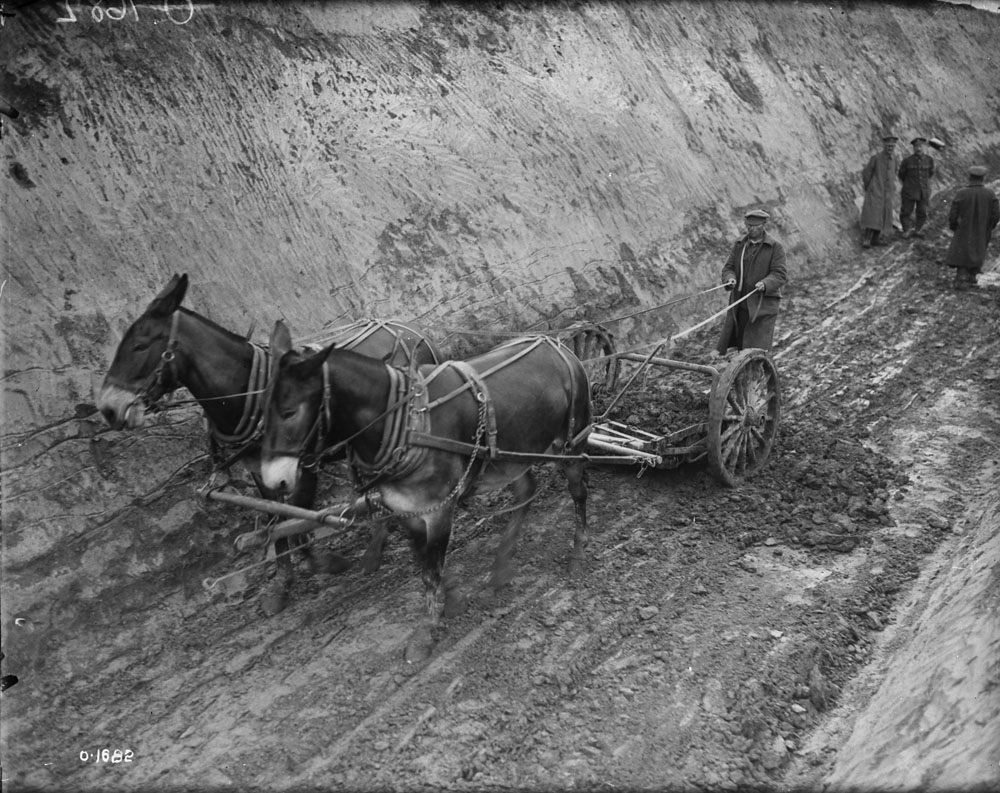
Under the secrecy surrounding operation 'Llandovery Castle' 1, the Corps moved to Amiens in early August 1918, CRT followed the ?eld engineers. 1st Tramways constructed the light railways along the Amiens-Roye highway. In the week of 9 to 19 August the four Canadian units reconstructed 13 miles of German lines, salvaged and laid three miles of German steel, and laid six miles of new steel. When the Canadian Corps switched back to the Arras front on 23 August 1918, 2nd Tramways and the 6th Battalion Engineers and the CRT, repaired four lines of 18 miles and had ammunition ?owing by 31 August 1918. From 23 September 1918 to the end of the war, the tramway companies leapfrogged with the construction sections in the lead and the traffic or operating section in the rear, moving essential supplies as far forward as possible. The CRT battalions could not build broad gauge track quick enough and there were not enough lorries during this rapid mobile phase. Luckily, the Germans abandoned their light railway, track and supplies only wrecking bridges and points. The old British track was lifted from the rear as the broad gauge advanced. As the army advanced, 9lb a metre track would be replaced by 16 or 20lb track capable of carrying the heavier nine-ton capacity narrow gauge cars and the heavier 40hp petrol electric locomotives. Construction was entirely manual using picks, shovels and wheelbarrows and mule drawn ploughs and scrapers for excavation and tip cars for ballast. The 1st Tramway Company wrote: Every yard must be thoroughly drained. Ballast is the whole secret of successful railroading. Six to eight inches needed immediately after laying track. […] Work is divided into survey, grading, track laying, ballasting, maintenance. […] the maximum amount of traffic comes over the road immediately after it is constructed and while the roadbed is still 'Green'. And that by the time the road has reached the final settlement the track will no longer be used, so that the maintenance conditions are continually at the worst while the traffic is heaviest, […].Conclusion In the six to eight weeks prior to a battle, the Tramways companies had periods of intense construction and in the month after the battle extending the lines forward. Winters tended to be periods of rest. The dedicated Canadian tramway companies were more efficient, with useful load varied between 56 and 90 per cent per train, than British Corps because of limitations in place from GHQ. After Vimy in April 1917, CTR began reporting casualties. After ordinary sickness, the largest cause of casualties was by gas with wounded and killed in significant battles. From May 1917 to December 1918 the tramway companies suffered 35 killed in action, three accidentally killed, 136 wounded, 179 gassed, 53 accidentally injured and 319 evacuated sick for a total of 725, not unlike an infantry battalion. There were significant accidental injured and killed. Because the Canadian Corps had its own tramways companies it was far more mobile and could build up resources far quicker prior to battle, which reduced the load on the horse transport and lorry traffic as the supply lines extended across the trench devastated zone. Abridged from: Shoebottom, Bradley, Canadian Corps Tramway Operations in the First World War, Stand To! - the journal of The Western Front Association, Number 141, March 2026 |
Hoverbox Photo Gallery - Canadian Railway Troops
from LAC - Libraries and Archives of Canada
This feature does not function correctly on phones and tablets
|
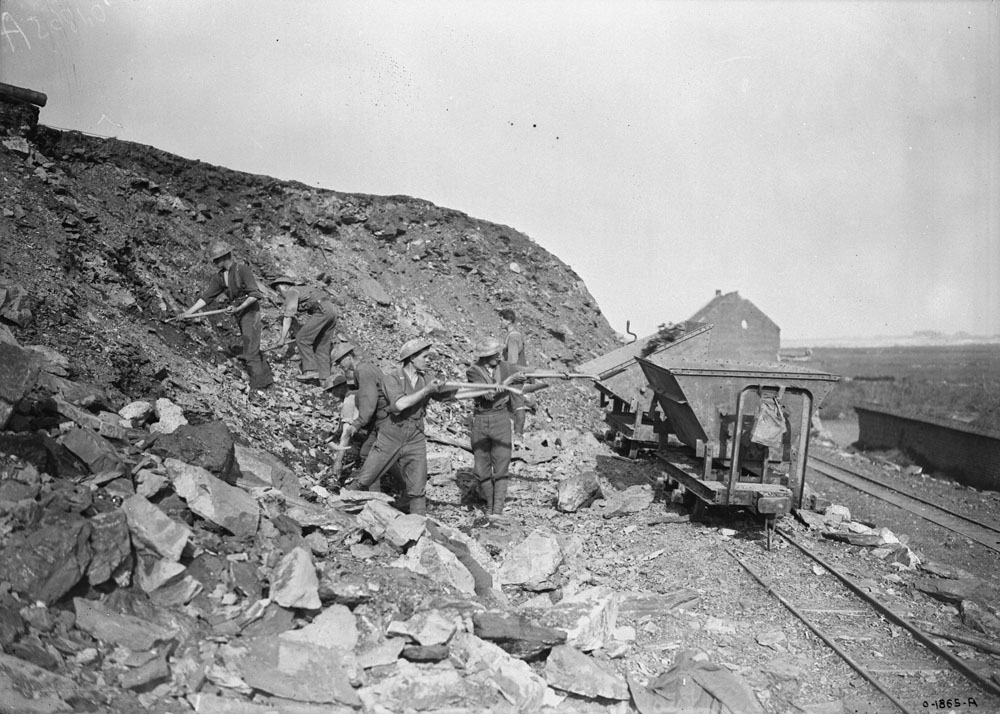
1. Ballast from Lens slag heap Sep17 LAC a001816 2. Track grading July 17 LAC a001663 |
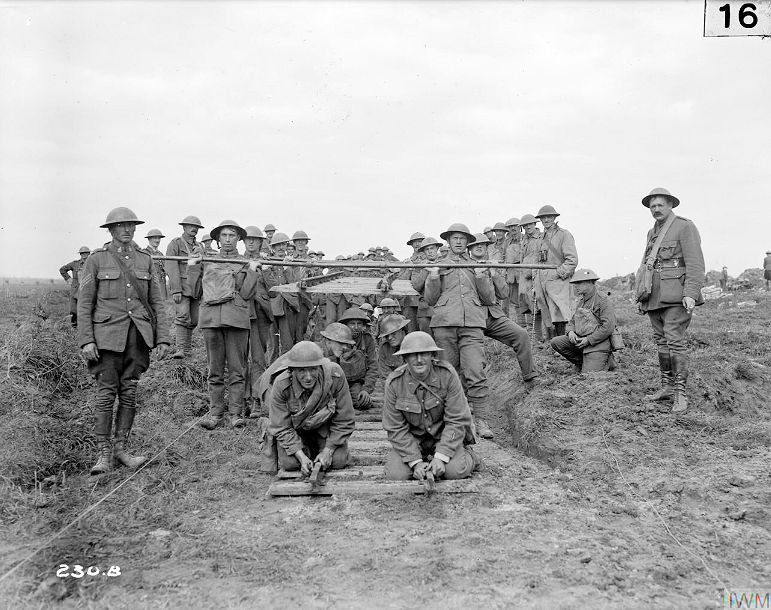
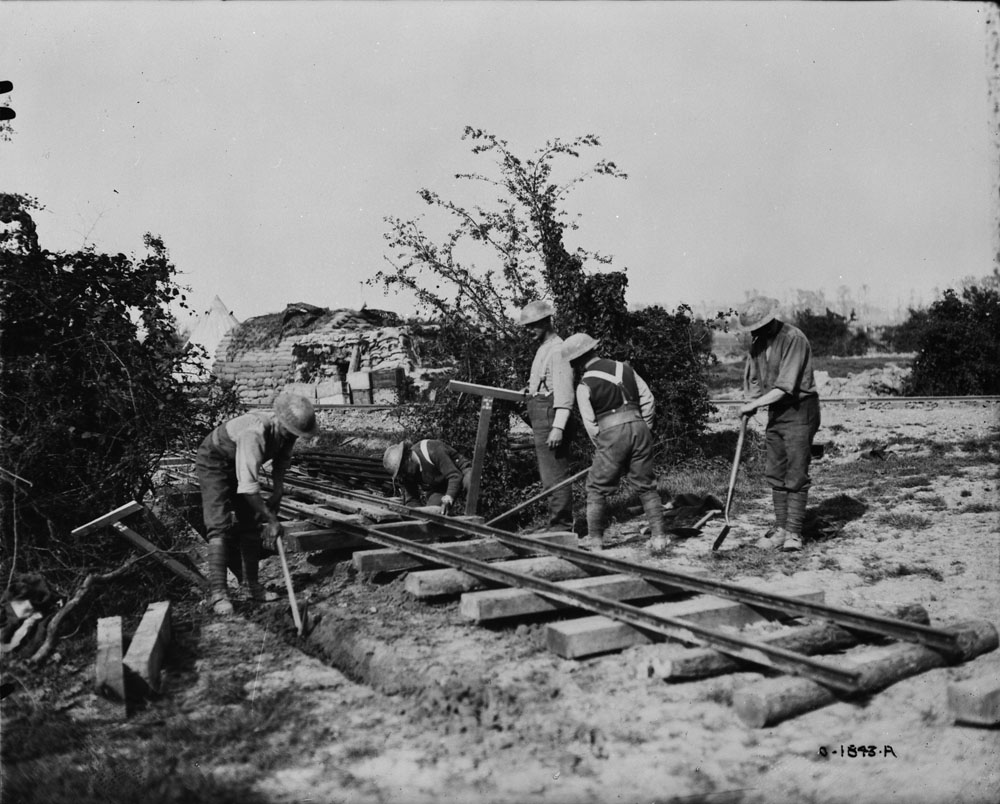
3. Canadian Railway Troops IWM Q35499 4. Track laying Sep17 LAC a001796 |
| 1 | 2 | 3 | 4 |
|
|
|
|
|
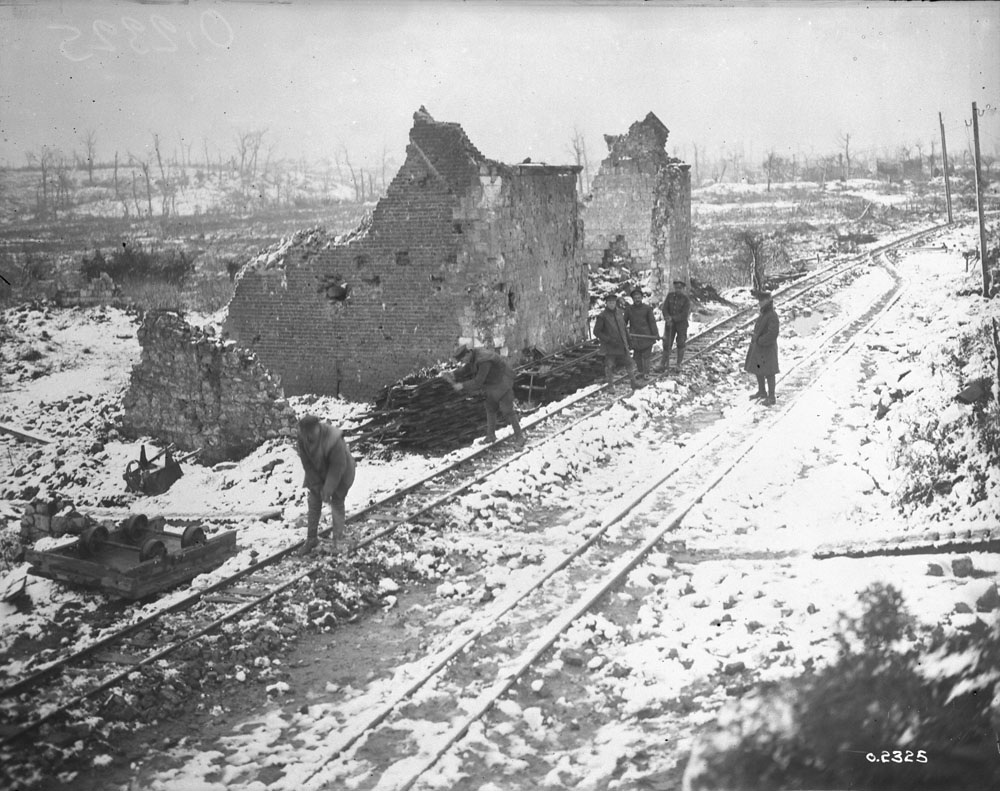
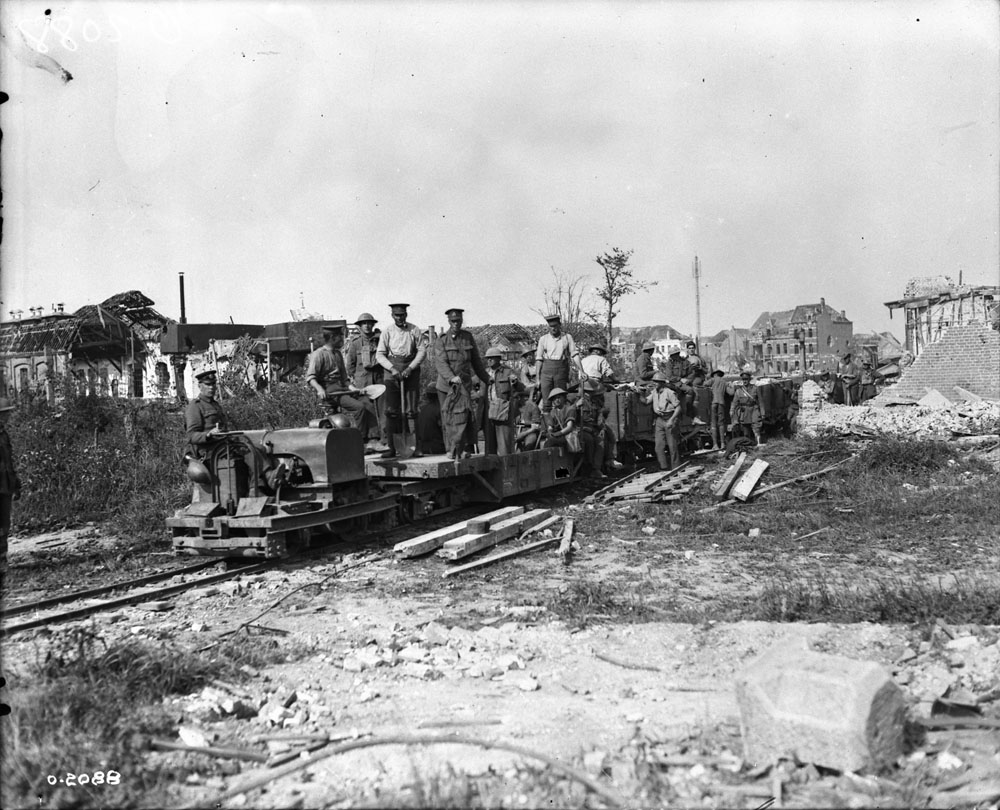
5. Track repair Dec17 LAC a002287 6. Train in ruined town Oct17 LAC a002066 |
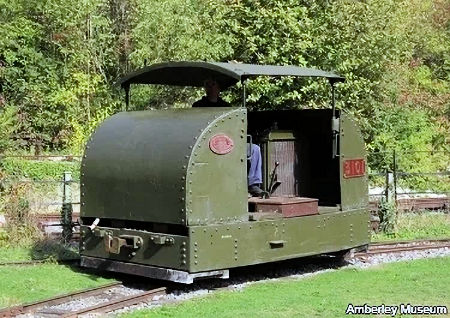
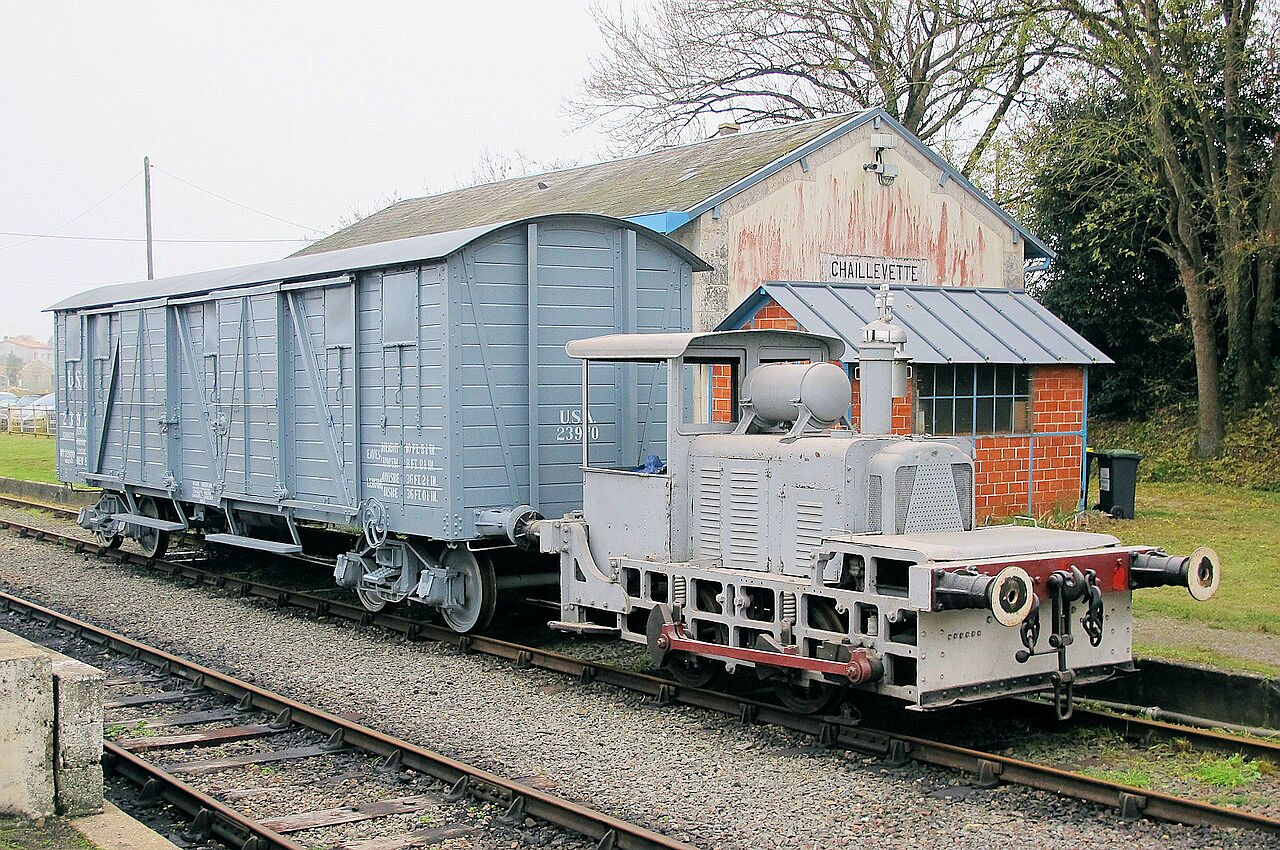
7. An armoured Simplex narrow gauge 8. A Baldwin petrol loco standard gauge |
| 5 | 6 | 7 | 8 |
|
|
|
|
|
 |
|||||||
| This page was created by Richard Crompton and maintained by Chris Glass |
 |
Version A6 Updated 06 June 2026 |
||||||


