 |
| Above: An 1896 map of the possible Castle Eden census site,
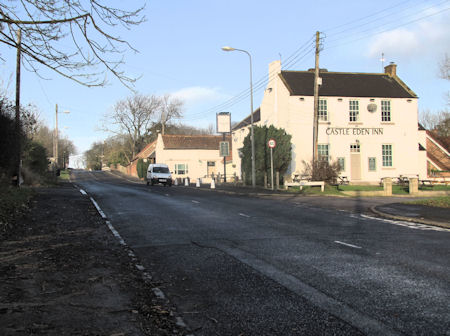
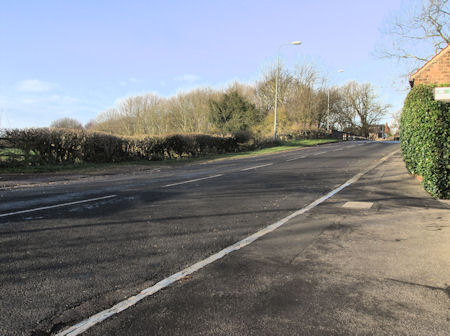
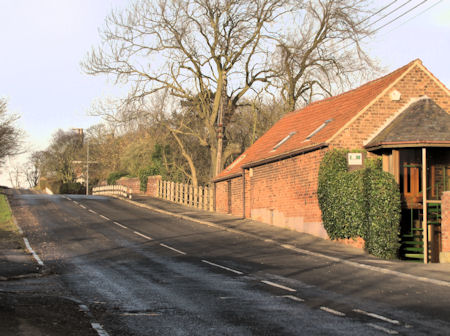
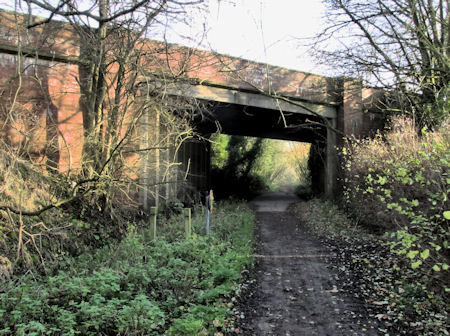
Scale: 1:10 560 The red numbers refer to the photographs below. Click on the map to open an A4 landscape map in its own window. |
1811 Info 2c for Elizabeth Crompton |
Paulina's second marriage to Edmund Hyldon
Four years after the death of James FOSTER, Paulina married Edmund HYLDON in Gainsborough in the December quarter of 1868. (GRO ref: Gainsborough 7a 1347)
1871 Census Sun/Mon. 2/3rd April 1871
Source:      FHL Film  TNA Ref RG10
             Piece: 4972; Folio: 101; Page: 28; Sched: 138
Dwelling:    Caravan by highway side (near Branch End/fire hole at Castle Eden)
Place:       Castle Eden, Durham, England

Name                Rel  Mar Age Occupation                          Birthplace
Edmund Hyldon       Head  M   40 Joiner for Government telegraph     Norfolk, Massingham
Paulina Hyldon      Wife  M   32                                     Yorks, Hull
Alfred Hyldon       Son   U   12 Messenger for Government telegraph  Norfolk, Massingham
Madalina R Hyldon   Dau   U    5                                     Yorks, Hull
|
|
| Above: An 1896 map of the possible Castle Eden census site,
Scale: 1:10 560 The red numbers refer to the photographs below. Click on the map to open an A4 landscape map in its own window. |
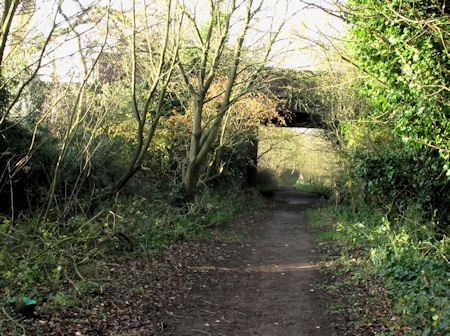
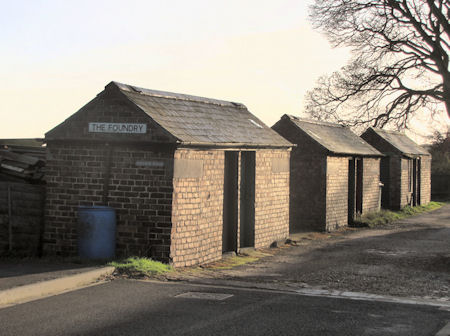
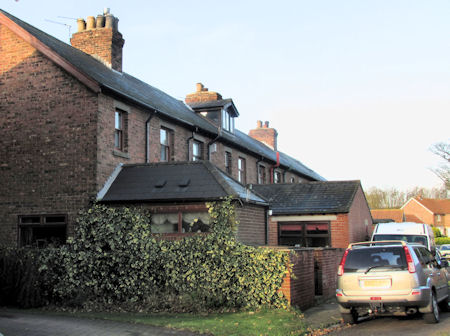
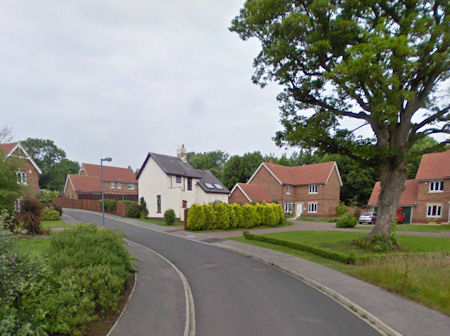
This location is speculative. However, it is possible that:
|
Hoverbox Photo Gallery - The Foundry, Castle Eden, Author: December 2011
Key - refers to the map numbers
This feature does not function correctly on phones and tablets
|
| 1 | 2 | 3 | 4 |
|---|
|
|
|
|
| 5 | 5 | 7 | 8 |
|---|
|
|
|
|
 |
Left: A modern map locating Castle Eden, with the camp site located by the beer glass |
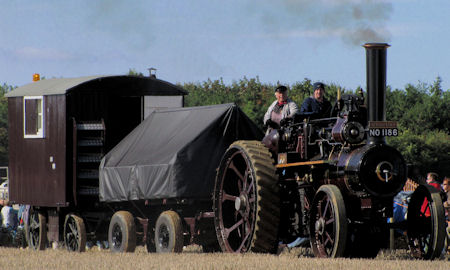
| Right: An example of a living van of the type that Paulina and Edmond may
have been using in the 1871 census.
In this example, the traction engine would be used to pull the trailer, containing the equipment and the brown living van, from job to job. Author |
 |
In the 1871 census Madalina R FOSTER has been given the HYLDON surname.
Alfred's birth in Massingham, Norfolk, suggests he was Edmund's son from a previous marriage. Massingham is likely to be Great or Little Massingham, some ten miles east of Kings Lynn, in the Kings Lynn enumeration district.
There are no obvious entries, in the Ancestry 1861 census index, for either Hyldon (inc. Hyl*) living in Norfolk. Massingham is in the enumeration district of Great Massingham. There are no Hylton in either enumeration district 3 or 4, although there is a family of Hildons in District 3 and families of Hiltons in District 4.
| More information 1 |
 |
The Stockton to Hartlepool Railway
Originally this line ran from Billingham to Hartlepool as an extension to the Clarence Railway (CR) and opened for goods traffic in 1840 and passengers a year later. On 01 September 1844 the Stockton and Hartlepool Railway Company acquired a 21-year lease on the Clarence Railway, extended to perpetuity from 01 January 1851. After several amalgamations it eventually merged with the Great Eastern Railway, the line by which Edmond Hyldon parked. By the early nineteenth century, Hartlepool was still a small town of around 900 people, with a declining port. In 1823 the council and Board of Trade decided that the town needed new industry, and so proposed a new railway to make Hartlepool a coal port, shipping out minerals from the Durham coal field. The plan faced competition from new docks. 25 kilometres (16 mi) to the north, the Marquis of Londonderry had approved the creation of the new Seaham Harbour (opened 31 July 1831). To the south the Clarence Railway connected Stockton-on-Tees and Billingham to a new port at Port Clarence (opened 1833). Further south again, in 1831, the Stockton and Darlington Railway extended into the new port of Middlesbrough. The council agreed to the formation of the Hartlepool Dock and Railway Company (HD& RCo) to extend the existing port by developing new docks, and to link to both local collieries and the developing railway network in the south. In 1833, it was agreed that Christopher Tennant of Yarm establish the HD&RCo, having previously opened the Clarence Railway. Tennant's plan was that the HD&RCo would fund the creation of a new railway, the Stockton and Hartlepool Railway, which would take over the loss-making CR and extend it north to the new dock, thereby linking to the Durham coal field. |
| More information 1 cont |
|
But after Tennant died in 1839, the running of the HD&RCo was taken over by
Stockton -on-Tees solicitor, Ralph Ward Jackson. Jackson became frustrated at the planning
restrictions placed on the old Hartlepool dock and surrounding area for access. He bought
land which was mainly sand dunes to the southwest, and established West Hartlepool.
Jackson was so successful at shipping coal from West Hartlepool through the HD&RCo,
that the new town eventually dwarfed the old town.
The eight acres (0.032 km2) West Hartlepool Harbour and Dock opened on 01 June 1 1847. On 01 June 1852 the fourteen acres (0.057 km2) Jackson dock opened. On the same day the Stockton and Hartlepool Railway connection to Leeds, Manchester and Liverpool opened. Under an act of 30 June 1852 (16 Vic, cap.142), Stockton & Hartlepool Railway Company and Hartlepool West Harbour & Dock Company amalgamated to form West Hartlepool Harbour & Railway Company. The new company purchased and merged with the Clarence Railway Company on 17 May 1853. The new company brought many visitors to the town’s new docks who were encouraged to set up businesses. The new line allowed the shipping of coal and wool products east, and the shipping of fresh fish to the larger inland towns and cities and raw fleeces west enabling another growth spurt in the town. This resulted in the opening of the Swainson Dock on 03 June 1856. By 1881, Old Hartlepool's population had grown from 993 to 12,361, but West Hartlepool had a population of 28,000. By 1900 the two Hartlepools were one of the four busiest ports in the country, and West Hartlepool had a population of 63,000. On 30 June 1865, West Hartlepool Harbour & Railway Company amalgamated with North Eastern Railway Company under an act of 1865 (28 & 29 Vic, cap.368). It was along the North Eastern Railways track that Edmund Hyldon worked on the Government’s telegraph |
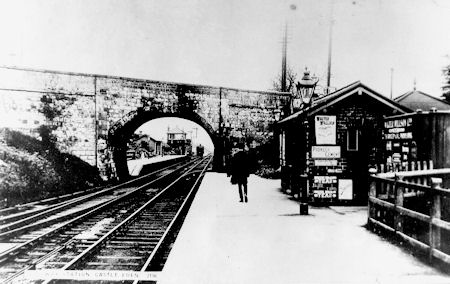 |
Left: Castle Eden Station before its closure in 1952 |
 |
 |
 |
|
| This page was created by Richard Crompton and maintained by Chris Glass |
Version A7 Updated 05 June 2023 |
||